Do Refrigerator Water Filters Remove PFAS? (2026 Guide)
This post contains affiliate links. As an Amazon Associate, we earn from qualifying purchases.
That refreshing glass of water from your fridge dispenser might not be as safe as you think if PFAS contamination is a concern in your area. While refrigerator filters effectively remove chlorine and improve taste, they offer dangerously limited protection against per- and polyfluoroalkyl substances—those persistent “forever chemicals” linked to cancer, immune suppression, and developmental problems. If you’re relying solely on your fridge’s filtration system for PFAS protection, you’re likely exposing your family to harmful contaminants that slip through standard filters with alarming ease.
Why Standard Refrigerator Filters Fail Against PFAS
Refrigerator water filters simply weren’t designed to tackle PFAS contamination. These units primarily use granular activated carbon (GAC) technology engineered for basic improvements like chlorine reduction and sediment removal—not the molecular complexity of PFAS compounds. The carbon-fluorine bonds that make PFAS so persistent in our environment also enable them to bypass your refrigerator’s filtration media with minimal resistance, turning your trusted water source into an unwitting delivery system for these dangerous chemicals.
Most consumers don’t realize that refrigerator filters prioritize convenience over comprehensive purification. The rapid flow rates necessary to fill your glass quickly provide mere seconds of contact time between water and carbon media—nowhere near enough for effective PFAS adsorption. While your fridge filter might make water taste better, it’s essentially functioning as an expensive pipe when it comes to PFAS removal.
How PFAS Molecules Defeat Your Fridge Filter
Molecular Size Makes All the Difference
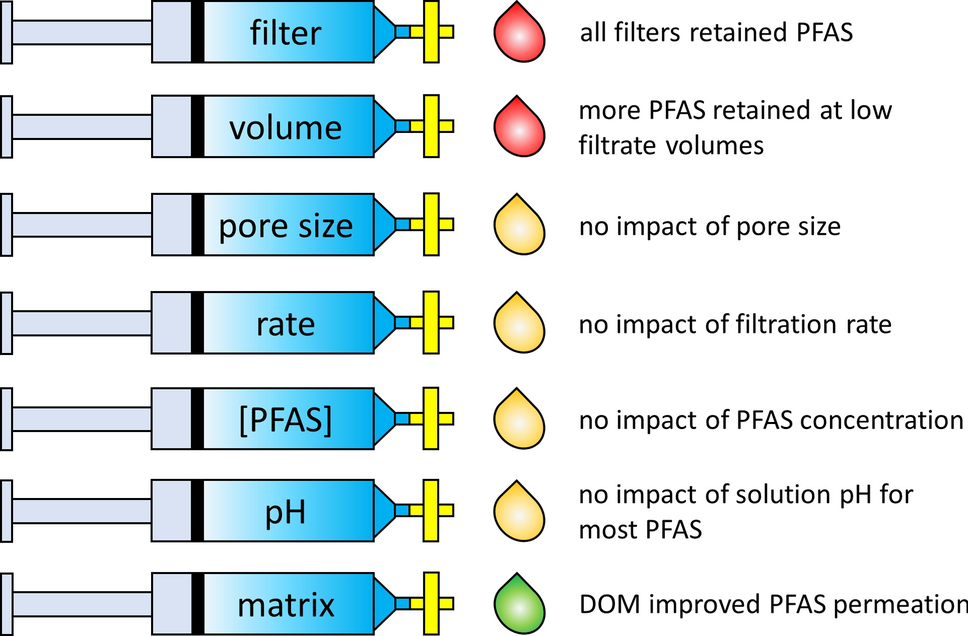
PFAS compounds are significantly smaller than the pore sizes in standard refrigerator filters. Your fridge’s carbon media can effectively trap larger particles like rust and sediment, but PFAS molecules—measured in parts per trillion—flow through unimpeded like fine sand through a chain-link fence. Shorter-chain PFAS variants like PFBS and PFBA are particularly problematic as their reduced molecular size makes them virtually impossible for refrigerator filters to capture.
Critical Contact Time Shortfall
Water flows through refrigerator filters at speeds optimized for convenience, not thorough purification. EPA researcher Thomas Speth confirms that effective PFAS removal requires “depending on the type of carbon used, the depth of the bed of carbon, flow rate of the water, the specific PFAS you need to remove, temperature, and the degree and type of organic matter.” The reality is that your fridge filter provides only a fraction of the necessary contact time, rendering its PFAS removal capabilities minimal at best.
Filter Saturation Accelerates PFAS Breakthrough
As refrigerator filters age, their limited PFAS removal capacity diminishes rapidly. Most users replace filters based on taste changes or reduced flow—signs that appear long after the filter has lost its ability to capture PFAS. Testing shows that refrigerator filters lose meaningful PFAS removal effectiveness after processing just 20-40 gallons of water, far below their rated capacity for other contaminants. This means your family could be drinking contaminated water for months without realizing it.
Which PFAS Compounds Your Fridge Filter Can’t Stop

Short-Chain PFAS: The Ultimate Filter Bypassers
PFBS (Perfluorobutanesulfonic acid) and PFBA (Perfluorobutanoic acid) represent the most challenging PFAS variants for refrigerator filtration. Their shorter carbon chains result in minimal interaction with carbon surfaces, yielding removal rates that approach zero. When these compounds contaminate your water supply, your refrigerator filter becomes functionally useless for PFAS protection.
GenX Chemicals: Engineered to Evade Filtration
GenX chemicals—developed as replacements for older PFAS compounds—were specifically engineered to avoid the adsorption characteristics that made PFOA somewhat filterable. These modern PFAS variants laugh at standard refrigerator filtration, passing through carbon media with minimal resistance. If your water contains GenX compounds, your fridge filter provides essentially no protection.
Even Long-Chain PFAS Eventually Break Through
PFOA and PFOS—the most common PFAS compounds—show variable removal rates that depend entirely on perfect conditions. While fresh carbon might achieve temporary 100% removal under laboratory conditions, real-world performance drops dramatically as filters age and water chemistry fluctuates. Any refrigerator filter claiming “PFAS removal” without specific NSF/ANSI P473 certification is making misleading claims.
Testing Your Water for Accurate PFAS Levels
Professional Laboratory Testing Is Essential
Stop guessing about your water quality—send samples to certified drinking water laboratories for definitive PFAS detection. These facilities use advanced analytical methods to detect trace chemical levels down to parts per trillion, providing comprehensive results covering 14+ common PFAS compounds. SimpleLab Tap Score PFAS Water Test offers consumer-friendly testing with prepaid shipping and detailed instructions, giving you actionable data rather than marketing promises.
Home Testing Kits Won’t Deliver Reliable Results
Be wary of any home test strips claiming PFAS detection—reliable PFAS testing requires sophisticated laboratory equipment. The molecular complexity and extremely low concentrations of PFAS make accurate home testing impossible with current technology. Anyone selling “instant PFAS test strips” is selling false security that could put your family at risk.
Effective PFAS Filtration Solutions That Actually Work
Reverse Osmosis: The Gold Standard for PFAS Removal
Install a dedicated reverse osmosis system under your sink for reliable PFAS protection. These systems force water through semi-permeable membranes with pore sizes smaller than PFAS molecules, achieving consistent 90%+ reduction rates across all compound types. While the initial investment ranges from $200-$400 with $100 annual maintenance, this solution provides peace of mind that your refrigerator filter simply cannot match.
Enhanced Carbon Systems: Purpose-Built for PFAS
Upgrade to granular activated carbon systems specifically designed for PFAS removal. Unlike refrigerator filters, these units feature larger carbon beds and slower flow rates that dramatically improve adsorption efficiency. Whole-house systems ($1,000-$3,000) treat all water entering your home, while point-of-use units ($300-$800) focus on drinking water at your kitchen sink—both require regular carbon replacement as saturation occurs.
Critical Certification Standards for PFAS Filtration

Demand NSF/ANSI P473 Certification
When evaluating filtration systems, look specifically for NSF/ANSI P473 certification—the only standard that addresses PFOA and PFOS reduction. General NSF/ANSI 53 certification covers broader contaminant categories but doesn’t guarantee PFAS removal. Crucial insight: Most refrigerator filters lack any PFAS-specific certification, despite marketing claims that suggest otherwise.
Immediate Actions to Protect Your Family
Stop Relying on Your Refrigerator Filter for PFAS Protection
Accept the hard truth that your fridge’s built-in filtration cannot protect against PFAS. Continuing to depend on it creates dangerous false security while contaminants accumulate in your body over time. Your refrigerator filter remains valuable for improving taste and removing chlorine, but it should never be your primary defense against PFAS.
Test Before You Invest in Filtration
Order professional PFAS testing before spending money on filtration systems. Contamination levels vary dramatically by location, and knowing your specific profile guides appropriate system selection. Some areas have minimal PFAS, making expensive filtration unnecessary, while others require immediate action.
Select the Right Solution for Your Situation
Budget-conscious option: Under-sink reverse osmosis ($200-$400) for drinking water only
Comprehensive protection: Whole-house GAC system ($1,000-$3,000) for all household water
Temporary measure: Certified bottled water while researching long-term solutions
Monitor System Performance Regularly
Establish baseline PFAS levels through testing, then retest annually after installing any filtration system. Track performance to ensure continued effectiveness and schedule maintenance based on actual results rather than calendar time. Remember that even effective systems require proper maintenance to maintain PFAS removal capabilities.
Bottom line: Your refrigerator water filter improves taste and removes chlorine but cannot reliably remove PFAS. These persistent “forever chemicals” require specialized filtration systems designed specifically for their unique properties. Invest in properly certified PFAS filtration or accept continued exposure—your fridge filter simply isn’t up to this critical health challenge. Testing your water and selecting the right filtration solution represents the only reliable path to protecting your family from these dangerous contaminants. Don’t gamble with your family’s health; take action today to ensure your drinking water is truly safe.