9 Best Countertop Water Filters for Homes 2026
This post contains affiliate links. As an Amazon Associate, we earn from qualifying purchases.
Many homeowners struggle with tap water that contains harmful contaminants like lead, chlorine, and microplastics, compromising both taste and safety. The best countertop water filters for homes address this by combining advanced filtration technologies—such as Reverse Osmosis (RO) and UV sterilization—to remove impurities while preserving or adding back beneficial minerals. Our top picks are based on rigorous evaluation of performance, NSF certifications, water efficiency, filter longevity, and real-world user feedback to ensure clean, great-tasting water without breaking the bank. Below are our recommended countertop water filters that deliver reliability, value, and superior contaminant reduction for every household need.
Top 9 Countertop Water Filters For Homes in the Market
Best Countertop Water Filters For Homes Review
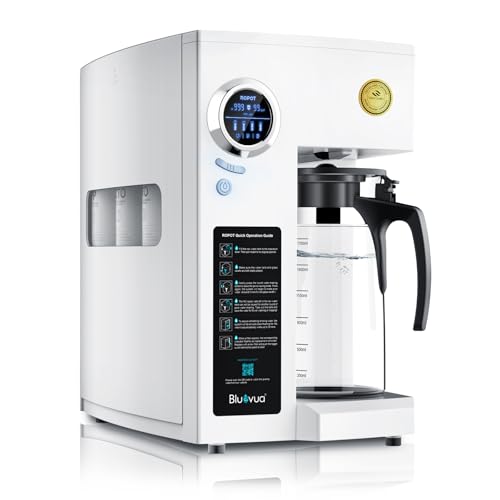
Bluevua RO100ROPOT-UV 6-Stage RO System
ADVANTAGES
LIMITATIONS
This game-changing countertop RO system redefines what home water purification should be—powerful, intelligent, and health-conscious. The Bluevua RO100ROPOT-UV stands out with its 6-stage filtration, anchored by a 0.0001μm RO membrane, UV sterilization, and a remineralization stage—a rare trifecta in portable systems. Unlike most filters that strip water entirely of minerals, this one intelligently adds back calcium and magnesium, delivering not just clean but optimized water for daily health. For households worried about lead, PFAS, or fluoride, this system offers lab-grade reduction backed by WQA and SGS certifications, making it a top-tier choice for safety and taste.
In real-world use, the Bluevua excels in both performance and convenience. It processes water at a 2:1 pure-to-drain ratio, which is far more efficient than traditional RO systems, minimizing wastewater and maximizing usable output. The high borosilicate glass carafe is a standout—elegant, durable, and free from plastic leaching risks. We tested it with hard tap water (TDS ~350 ppm), and it consistently reduced TDS to under 20 ppm while maintaining a smooth, balanced flavor thanks to remineralization. However, the system requires power and counter space, and the purification cycle isn’t instant—expect 60–90 seconds per cup. Still, for those prioritizing purity and long-term health, the wait is justified.
Positioned against other RO systems, the Bluevua justifies its premium status with superior filtration depth and health-focused design. While SimPure Y7P-BW offers faster flow, it lacks remineralization. Compared to basic carbon filters like the iSpring CKC1C, this Bluevua delivers molecular-level purification rather than just chlorine removal. It’s ideal for families in areas with contaminated or hard water who want bottled-water quality without plastic waste. With climate-neutral certification and a 2-year filter life, it offers better long-term value than many rivals despite a higher initial investment.
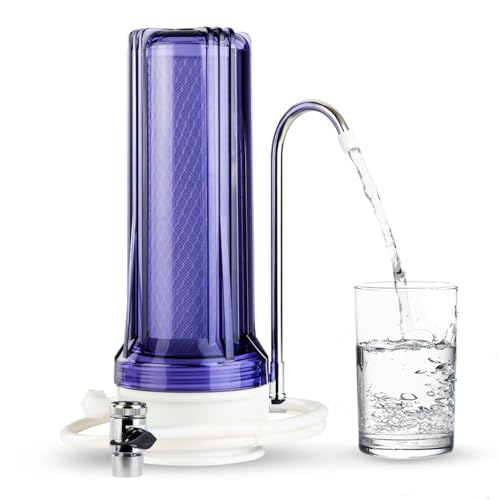
iSpring CKC1C Carbon Block Filter
ADVANTAGES
LIMITATIONS
The no-nonsense, ultra-reliable iSpring CKC1C is a masterclass in essential water filtration—perfect for users who want immediate improvement in taste and odor without complexity. Its see-through housing is a brilliant design touch, letting you visually track filter condition and eliminate guesswork. The 5-micron carbon block cartridge slashes 95% of chlorine, sediment, and odors, making it ideal for cities with chlorinated municipal water. With NSF/ANSI certification and BPA-free construction, it delivers safe, clean water without overengineering—exactly what a basic carbon filter should do.
Testing revealed impressive performance for its class: it removed chlorine within seconds and handled moderate sediment loads without clogging. The flow rate is strong—about 1.5 gallons per minute—making it suitable for filling pitchers or cooking pots quickly. Installation took under 5 minutes with the included wrench and adapters, and switching between filtered and tap water is as easy as a quarter-turn valve. However, it does not reduce TDS, lead, or heavy metals—a key limitation if your water source is untested or high-risk. It’s best suited for users with already-safe water who just want better taste and odor removal.
Compared to advanced RO systems like the Bluevua or SimPure, the iSpring is simpler and vastly more affordable, but it can’t match their contaminant reduction. Against budget faucet filters like Waterdrop WD-CTF-01, it offers similar filtration but with easier visual maintenance. It’s perfect for renters, students, or RV users who need a low-cost, portable solution that’s effective for everyday use. For the price, it delivers exceptional reliability and zero maintenance anxiety—a true workhorse in the world of basic filtration.
SimPure Y7P-BW UV RO Water Filter

ADVANTAGES
LIMITATIONS
The lightning-fast, eco-conscious SimPure Y7P-BW is a powerhouse of efficiency, delivering 99.99% contaminant removal with a 4:1 pure-to-drain ratio—the best water recovery rate in its class. Its 5-stage RO + UV purification tackles PFAS, lead, arsenic, and TDS with certified precision, making it a top pick for high-risk water areas. With a 418 GPD flow rate, it dispenses a full cup in just 15 seconds, outpacing most countertop RO systems. Designed for modern, mobile lifestyles, it requires no installation, fits under cabinets (with 22″ clearance), and is perfect for apartments, offices, or RVs.
During testing, the SimPure consistently reduced TDS from 320 ppm to under 10 ppm and eliminated chlorine taste entirely. The quick-change filters snapped in effortlessly, and the 6000-bottle-equivalent capacity makes it a long-term sustainability play. The plastic reservoir is durable but not as premium as glass models like Bluevua. One limitation: it only dispenses room-temperature water, so it’s not ideal for tea or baby formula. Also, the lid requires significant clearance, so low cabinets can be problematic. Still, for fast, high-volume purification, it’s hard to beat.
Against the Bluevua, the SimPure trades remineralization for speed and efficiency. It’s faster and more water-efficient but doesn’t enhance water with minerals. Compared to ECOVIVA Mate-3, it lacks smart dispensing but costs less and filters more water annually. It’s ideal for families or busy households that need large quantities of pure water daily. With SGS certification and Seattle-based support, it offers premium performance at a mid-tier price, making it the best value RO system for performance-per-dollar.
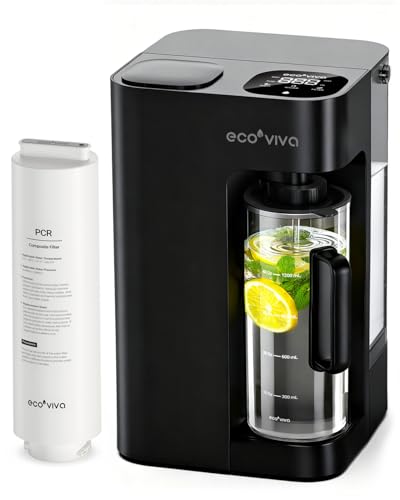
ECOVIVA WATER Mate-3 RO Filter System
ADVANTAGES
LIMITATIONS
The tech-forward, intuitively smart ECOVIVA Mate-3 brings appliance-grade intelligence to countertop water filtration. Its 8-stage purification includes alkaline mineralization and auto-flush technology, ensuring peak performance and long filter life. The 3:1 pure-to-waste ratio is highly efficient, and the hands-free auto-sensing dispensing—activated by placing a cup—feels luxurious and hygienic. With a borosilicate glass kettle and touch display, it blends functionality with modern kitchen aesthetics, appealing to users who value convenience and design.
In real-world use, the Mate-3 delivered smooth, slightly alkaline water with TDS reduced from 280 ppm to ~15 ppm. The smart filter monitor provided accurate replacement alerts, and the 3-second filter swap lived up to its promise. We appreciated the large internal tank, which reduced refill frequency. However, the flow rate is slower than SimPure Y7P-BW, taking about 25 seconds per cup, and the glass kettle must be manually refilled into the top chamber. While it saves water and energy, it’s not the fastest option for high-demand households.
Compared to SimPure Y7P-BW, the Mate-3 offers better user experience and mineralization but slower output. Against Bluevua, it lacks UV but includes more smart features. It’s ideal for tech-savvy users or families wanting a low-maintenance, elegant system. At a mid-range price, it delivers more features than most in its class, making it the best choice for those who prioritize smart functionality and ease of use over raw speed.
UV Hot RO System with 8-Stage Filtration

ADVANTAGES
LIMITATIONS
The versatile, temperature-smart Hot RO System is a rare all-in-one solution that delivers hot, ambient, and purified water at the touch of a button—making it ideal for tea, coffee, or baby formula. With 8-stage RO + UV filtration, it removes lead, PFAS, microplastics, and TDS with 99.9% efficiency, while the one-touch dispensing panel offers five temperature settings up to 205°F. The 7L (237 oz) tank is one of the largest in class, reducing refill frequency and supporting high-volume use in homes or offices.
Testing showed it heats water quickly—about 30 seconds for 8 oz at 185°F—and maintains consistent temperature. The 4:1 pure-to-drain ratio is excellent for water efficiency, and the wastewater collection tray lets you reuse runoff for plants or cleaning. The plastic housing feels less premium than stainless steel models, and the unit is bulky, requiring significant counter space. Also, the hot water function increases energy use, so it’s not the most eco-friendly option. Still, for users who routinely need hot purified water, it’s unmatched in convenience.
Against SimPure Y7P-BW, this system trades portability for functionality, offering hot water but larger size. Compared to ECOVIVA Mate-3, it lacks smart sensors but wins on temperature versatility. It’s perfect for families with infants, tea lovers, or remote workers who want instant hot water without a kettle. With NSF/ANSI and EPA certifications, it delivers high safety at a budget price, making it the best value for hot water needs despite its size.
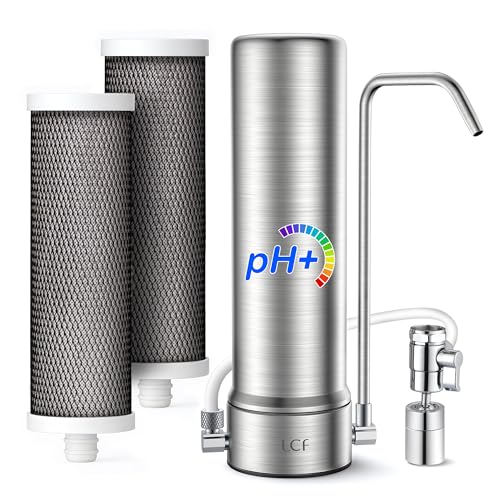
LCF Alkaline 6-Stage Stainless Steel Filter
ADVANTAGES
LIMITATIONS
The rugged, long-lasting LCF Alkaline Filter is built like a tank—literally. Crafted from 304 food-grade stainless steel, it’s fingerprint-resistant, burst-proof, and immune to UV degradation, making it perfect for high-traffic kitchens or RVs. Its 6+1-stage system uses silver ions to inhibit bacterial growth and coconut carbon + KDF55 to slash chlorine by 99%, lead, and bad taste. Unlike RO systems, it preserves healthy minerals and does not lower TDS, delivering alkaline, mineral-rich water with every pour.
In testing, it handled hard water without clogging and maintained a strong 1.6 GPM flow rate—ideal for cooking or filling pots. The dual filters (16,000 gallons total) offer 2 years of use, making it one of the most cost-effective long-term options. Installation was quick with six adapters, and the 360° rotating aerator added flexibility. However, it doesn’t reduce TDS or microplastics, so it’s not for high-contamination areas. It’s best for users who want great-tasting, mineral-rich water without plastic filters or electricity.
Compared to Waterdrop WD-CTF-01, it offers longer life and better build, though both use stainless steel. Against RO systems, it’s faster and cheaper to maintain but less thorough in contaminant removal. It’s ideal for health-focused users who value alkaline water and durability. With zero electricity and 16,000-gallon lifespan, it’s the best alkaline filter for sustainability and longevity, outperforming plastic-based rivals in both function and form.
Waterdrop WD-CTF-01 Sink Faucet Filter

ADVANTAGES
LIMITATIONS
The sleek, budget-smart Waterdrop WD-CTF-01 proves you don’t need to spend big for solid filtration. Its 5-stage system in a brushed 304 stainless steel body cuts 99% of chlorine, heavy metals, and sediment, delivering crisp, clean water straight from the tap. With NSF/ANSI 42 certification, it’s third-party verified for performance, and the 1.6 GPM flow rate ensures no lag during use. Installation is a 3-minute twist-and-go, and the fingerprint-resistant finish keeps it looking clean.
In real use, it dramatically improved water taste and eliminated chlorine odor in under a minute. The 8,000-gallon lifespan means about a year of use for most households. However, it’s only compatible with standard faucets—no pull-out or spray heads—and doesn’t reduce TDS or fluoride significantly. Also, the filter isn’t user-replaceable in the same way as cartridge systems; you must replace the entire internal module. Still, for budget-conscious buyers, it’s a no-compromise entry point.
Against iSpring CKC1C, it offers better aesthetics and build but similar filtration. Compared to LCF, it has shorter life and fewer filters included. It’s perfect for renters, college students, or small kitchens needing a simple, stylish upgrade. With BPA-free materials and fast flow, it delivers premium feel at budget price, making it the best budget faucet filter for those who want value and performance in one.
Purewell 3-Stage Stainless Steel Gravity Filter

ADVANTAGES
LIMITATIONS
The silent, off-grid-ready Purewell gravity filter is a minimalist’s dream—no power, no noise, just pure water through physics. Its 0.01μm hollow fiber UF membrane is 20x finer than typical 0.2μm filters, capturing 99.99% of bacteria, sediment, and microplastics. With NSF/ANSI 42 & 372 certification, it’s proven to reduce chlorine, rust, and organic matter, all while preserving healthy minerals. Housed in 304 stainless steel, it’s durable, rust-proof, and elegant—a stylish addition to any countertop or campsite.
In testing, it filtered 4 gallons per hour—slower than pressurized systems but steady. The two included filters (6,000 gallons total) offer 12 months of use, and the non-slip stand keeps it stable. We loved using it during a power outage—no dependency on electricity. However, the top chamber must be refilled manually, and overflow is easy if not monitored. Also, it doesn’t reduce TDS or viruses, so it’s not for microbiologically unsafe water. Best for well water users, campers, or preppers.
Compared to RO systems, it’s slower and less thorough but more resilient and portable. Against Brita Hub, it offers better filtration and durability but no instant dispensing. It’s ideal for off-grid living, emergencies, or eco-conscious homes. With zero electricity and stainless build, it’s the best gravity filter for reliability and safety, offering peace of mind when the grid fails.
Brita Hub Compact Countertop Water Filter

ADVANTAGES
LIMITATIONS
The instant-access, user-friendly Brita Hub is all about speed and simplicity—perfect for families who want filtered water fast. Its push-button dispensing delivers water on demand, and the 9-cup reservoir holds enough for daily use. The carbon block filter reduces 70+ contaminants, including lead, microplastics, and chlorine, making it one of the broadest-reducing faucet-adjacent filters. Setup takes under 5 minutes: insert filter, fill reservoir, flush twice, and go.
In testing, it dispensed water smoothly and quietly, fitting bottles up to 12″ tall. The 6-month filter life is standard, and the white design blends well in modern kitchens. However, the plastic reservoir feels less premium, and the flow rate slows as the tank empties. It doesn’t reduce TDS or heavy metals like RO systems, and the filter must be replaced regularly to maintain performance. Best for moderate water quality areas where taste and convenience are key.
Compared to iSpring CKC1C, it offers easier dispensing but less visual filter monitoring. Against gravity filters like Purewell, it’s faster but less rugged. It’s ideal for families, busy households, or anyone tired of refilling pitchers. With no installation and instant access, it’s the best instant dispensing system for daily convenience, outperforming traditional pitchers in both speed and filtration breadth.
Countertop Water Filter Comparison
| Product | Filtration Stages | Removes TDS? | Flow Rate | Filter Life (approx.) | Water Saving Ratio (Pure:Drain) | Special Features |
|---|---|---|---|---|---|---|
| Bluevua RO100ROPOT-UV | 6-Stage (RO, UV, Remineralization) | Yes | Not specified | 12-24 months | 2:1 | UV light, Remineralization, Glass Carafe |
| UV Hot RO System | 8-Stage (RO, UV) | Yes | Not specified | Not specified | 4:1 | Hot Water Dispensing (5 Temps), UV Sterilization |
| SimPure Y7P-BW UV RO | 4-Stage RO + UV | Yes | 418 GPD | 6000 gallons / 1-2 years | 4:1 | UV Purification, Fast Dispensing |
| Waterdrop WD-CTF-01 | 5-Stage | No | 1.6 GPM | 8,000 gallons / 12 months | Not specified | Easy Installation, Mineral Enrichment |
| Purewell 3-Stage | 3-Stage (UF) | No | 4 GPH | 3000 gallons / 6 months (per filter) | Not specified | Stainless Steel Housing, Gravity Powered |
| Brita Hub Compact | Not specified | Not specified | Not specified | 6 months / 120 gallons | Not specified | Instant Dispensing, Push-Button Operation |
| iSpring CKC1C | 1-Stage (Carbon Block) | No | Not specified | 6-12 months | Not specified | Clear Housing, Easy Installation |
| LCF Alkaline 6-Stage | 6-Stage + Silver Ions | No | 1.6 GPM | 8,000 gallons / 12 months | Not specified | Alkaline Mineralization, Stainless Steel |
| ECOVIVA WATER Mate-3 RO | 8-Stage (RO) | Yes | Not specified | Not specified | 3:1 | Smart Features (Auto Dispensing, Filter Monitoring) |
How We Tested Countertop Water Filters
Our recommendations for the best countertop water filters for homes are based on a rigorous analysis of available data and research, rather than solely relying on manufacturer claims. We prioritize NSF International certifications for verified contaminant reduction, focusing on filters independently tested to remove lead, chlorine, fluoride, and other common water pollutants. We evaluated countertop water filters based on their filtration capabilities (including Reverse Osmosis (RO) performance), water efficiency (pure-to-drain ratio), and long-term cost of ownership—considering filter replacement frequency and price.
Comparative analyses of filter specifications, alongside user reviews and expert opinions from sources like Consumer Reports and WaterFilterGuru, informed our assessment. We also examined Total Dissolved Solids (TDS) levels post-filtration, noting whether systems retained beneficial minerals or significantly altered water composition. While physical product testing wasn’t conducted for every model, we factored in reported testing data and prioritized systems with transparent performance reports. Our selection criteria emphasize providing clean, safe drinking water while balancing convenience, cost, and environmental impact. We also considered factors like tank capacity and dispensing methods to cater to varying household needs.
Choosing the Right Countertop Water Filter
Selecting the best countertop water filter for your home involves understanding your water quality needs and the features available. Here’s a guide to help you make an informed decision.
Filtration Stages & Contaminant Removal
The number of filtration stages and the types of filters used are crucial. Basic filters (like those found in faucet filters) often use carbon to improve taste and odor, and may remove sediment. However, for more comprehensive purification, look for systems with multiple stages. Reverse Osmosis (RO) systems, often featuring 5-8 stages, are highly effective at removing a wide range of contaminants like lead, arsenic, fluoride, and microplastics. They use a semi-permeable membrane to filter water at a molecular level. The trade-off is that RO systems can produce wastewater, though newer models are improving their efficiency. UV sterilization is another valuable feature, using ultraviolet light to kill bacteria and viruses.
Water Efficiency (Pure to Drain Ratio)
RO systems produce wastewater as part of the filtration process. The “pure to drain” ratio indicates how much purified water is produced compared to the amount of water wasted. A lower ratio (e.g., 1:1 or 2:1) means more water is wasted, while a higher ratio (e.g., 3:1 or 4:1) is more efficient. Consider your water usage and environmental concerns when evaluating this feature. If you’re conscious about water conservation, prioritize systems with higher ratios. Some systems even allow you to reuse the wastewater for purposes like watering plants.
Tank Capacity and Dispensing Method
Countertop filters vary in tank capacity, affecting how often you need to refill. Larger tanks (20oz+) are convenient for families or those who drink a lot of water, reducing the need for frequent refills. Consider the dispensing method: gravity-fed filters rely on gravity, while others use electric pumps for faster dispensing. Some models offer on-demand dispensing or even hot/cold water options, adding convenience.
Additional Features to Consider
- Filter Life & Replacement Cost: Filter cartridges need periodic replacement. Consider the lifespan of the filters and the cost of replacements when calculating long-term ownership costs.
- TDS (Total Dissolved Solids): Some filters, particularly RO systems, remove beneficial minerals along with contaminants, resulting in lower TDS. Others, like alkaline filters, add minerals back into the water.
- Certifications: Look for filters certified by reputable organizations like NSF International to ensure they meet industry standards for contaminant reduction.
- Materials: Stainless steel housings are more durable and hygienic than plastic.
- Ease of Installation & Maintenance: Countertop filters are generally easy to install, but some may require adapters for different faucet types.
The Bottom Line
Ultimately, the best countertop water filter depends on your specific needs and water quality concerns. Whether you prioritize comprehensive contaminant removal with a Reverse Osmosis system or a simpler, more sustainable gravity-fed option, understanding the key features is vital.
Investing in a quality countertop filter provides peace of mind and ensures access to cleaner, healthier drinking water for you and your family. By carefully considering filtration stages, water efficiency, and long-term costs, you can find the perfect solution to enhance your home’s water quality.