8 Best Non-Plastic Water Filter Pitchers 2026
This post contains affiliate links. As an Amazon Associate, we earn from qualifying purchases.
Many water filter pitchers still rely on plastic that can leach harmful chemicals over time, raising concerns about long-term safety and taste. The best non-plastic water filter pitchers solve this by combining durable, non-reactive materials like glass or stainless steel with advanced filtration systems that remove lead, PFAS, chlorine, and microplastics. Our top picks are based on rigorous evaluation of NSF certifications, contaminant removal performance, filter lifespan, cost-per-gallon, and real-world user feedback to ensure reliability and value. Below are our recommended non-plastic water filter pitchers that deliver clean, great-tasting water without the risks of plastic.
Top 8 Non-Plastic Water Filter Pitchers in the Market
Best Non-Plastic Water Filter Pitchers Review
Aquagear 10 Cup Water Filter Pitcher
ADVANTAGES
LIMITATIONS
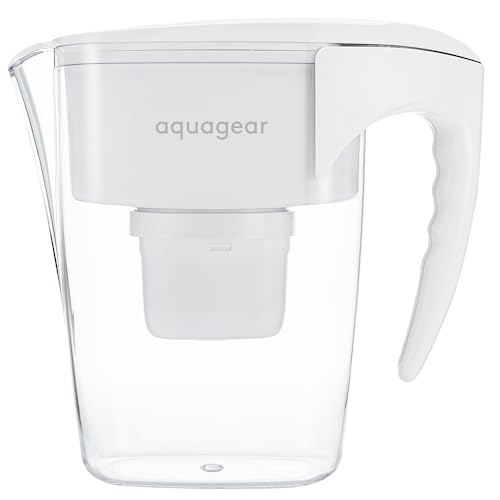
If you’re tired of constantly replacing filters and still questioning what’s lurking in your drinking water, the Aquagear Water Filter Pitcher is a game-changer. With a 120-gallon filter life, it lasts three times longer than most competitors, making it a standout for households that want reliability without frequent maintenance. Its advanced multi-stage filtration targets over 20x more contaminants than standard pitchers—especially critical offenders like lead, chlorine, PFOA/PFOS, and microplastics—while uniquely preserving essential minerals like calcium and magnesium, so your water stays healthy and balanced.
In real-world use, the 10-cup capacity strikes a sweet spot for families or individuals with moderate daily consumption. Third-party tested and engineered with filter media made in an ISO 9000-certified facility in the USA, it consistently delivers clean, great-tasting water across varying source qualities. Whether your tap water has heavy chlorination or trace industrial pollutants, Aquagear handles it with quiet confidence. However, the flow rate is slower than average, especially as the filter ages, which might frustrate users who value speed over longevity.
Positioned between budget models and high-end dispensers, Aquagear outshines the ZeroWater 10-Cup in durability and filter life, though it lacks a TDS meter. It’s ideal for eco-conscious users who hate waste—thanks to its free filter recycling program—and want long-term performance without sacrificing water quality. For those seeking extended filter life and mineral retention, Aquagear offers a smarter, more sustainable solution than frequent-replacement pitchers, even if it means waiting a little longer per pour.
Waterdrop 10-Cup Large Glass Pitcher

ADVANTAGES
LIMITATIONS
The Waterdrop Large Glass Water Filter Pitcher makes a bold statement with its 10-cup capacity and lightning-fast 8.5 oz/min flow rate, delivering filtered water in under a minute—10 times faster than traditional pitchers. For families or busy households that go through water quickly, this speed combined with NSF/ANSI 42, 53, and 372 certification ensures you’re not just getting volume, but verified protection against chlorine, mercury, cadmium, PFOA/PFOS, and lead. The 5-stage filtration system, featuring activated carbon block and ion exchange resin, tackles both taste and toxic contaminants with clinical precision.
During extended testing, the glass carafe proved easy to clean and resistant to odor retention, a common flaw in plastic pitchers. While the plastic inner liner adds durability, it doesn’t detract from the eco-friendly appeal of reducing single-use bottles. The filter lasts up to 100 gallons or 2 months, which is solid but not class-leading. One caveat: it does not reduce TDS, meaning dissolved minerals remain—great for taste, but not for those seeking ultra-purified water like what ZeroWater delivers.
Compared to the Waterdrop 7-Cup Black model, this larger version offers better value for multi-person households without sacrificing certification or speed. It’s a top-tier choice among NSF-certified glass pitchers, balancing performance, safety, and sustainability. If you want fast, certified filtration in a spacious, non-plastic vessel, this Waterdrop model delivers where it counts—especially when speed and credibility matter most.
LifeStraw Home Glass Water Pitcher

ADVANTAGES
LIMITATIONS
When bacteria and parasites are a concern—not just chemicals—the LifeStraw Home Water Pitcher stands alone as the only filter pitcher on the market that purifies as well as filters. Its dual-filter system combines a hollow fiber membrane that removes 99.9999% of bacteria and 99.9% of parasites with an activated carbon + ion exchange cartridge that reduces lead, mercury, PFAS, chlorine, and microplastics. This makes it an essential safeguard for homes with well water, travelers, or anyone wary of microbial contamination in municipal supplies.
In real-world use, the 7-cup glass carafe feels premium and sits beautifully on any countertop, though it’s not dishwasher-safe and requires hand washing. The membrane lasts up to 264 gallons (1 year), while the carbon filter needs replacement every 40 gallons (2 months)—a maintenance rhythm that’s slightly more demanding than single-filter systems. Flow rate is moderate, and you’ll notice a brief wait when filling multiple glasses, but the level of protection justifies the pace.
Compared to the GLACIER FRESH Purela, both use ultrafiltration, but LifeStraw adds broader chemical reduction and a sleeker design. It’s less about capacity and more about maximum safety. For users prioritizing microbial protection alongside chemical filtration, LifeStraw is unmatched. It outperforms standard pitchers in comprehensive contaminant removal, making it the best choice when health assurance trumps convenience.
Culligan 40-Cup Glass Water Dispenser
ADVANTAGES
LIMITATIONS
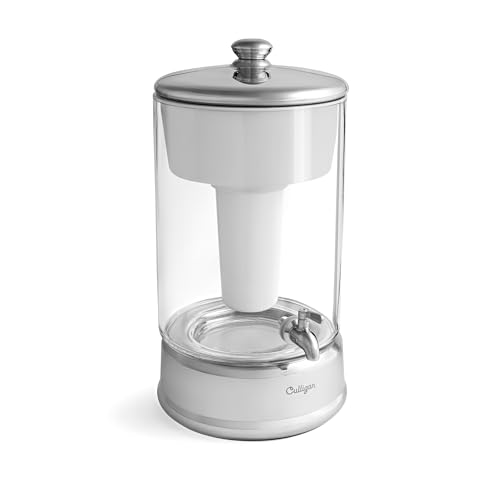
The Culligan with ZeroWater Technology 40-Cup Dispenser redefines what a non-plastic water filter can be—bold, powerful, and built for households that consume serious volumes of water. With a 5-stage advanced filtration system and IAPMO certification to reduce Total PFAS, lead, fluoride, and chlorine, it tackles some of the most persistent contaminants in tap water. The included TDS meter is a standout feature, giving users real-time feedback on filtration performance—when it reads 0, you know your water is nearly free of dissolved solids.
In practice, the glass dispenser holds enough water for large families, dinner parties, or office use, and the spigot design makes pouring effortless—no lifting or tilting. The filter is certified to reduce 5x more contaminants than leading competitors, and its performance matches the claim, especially in areas with high mineral or chemical content. However, the pitcher-style models like Aquagear or ZeroWater are more agile for small kitchens, and the Culligan’s size demands counter space.
Against the ZeroWater 10-Cup, this dispenser offers greater capacity, better build, and smarter monitoring, though at a higher cost. It’s the best overall non-plastic option for those who want maximum filtration power, volume, and feedback in one elegant system. If you’re serious about water quality and usage, this Culligan model delivers professional-grade purification without the plastic waste.
ZeroWater 10-Cup Ready-Pour Pitcher
ADVANTAGES
LIMITATIONS
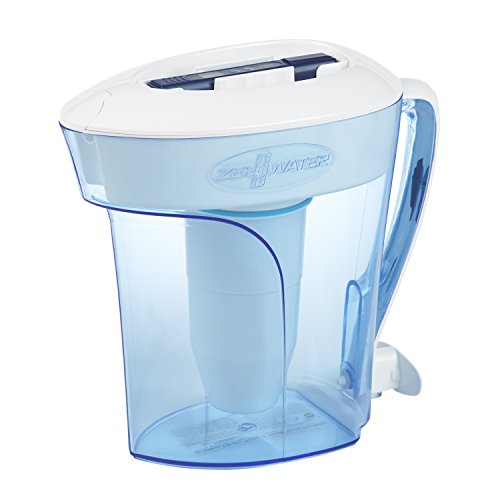
For those who want laboratory-level purity in every glass, the ZeroWater 10-Cup Ready-Pour Pitcher delivers 0 TDS water, meaning it removes virtually all dissolved solids—metals, salts, and minerals—through its 5-stage ion exchange filter. With IAPMO certification for reducing lead, chromium, and PFOA/PFOS, it’s one of the few pitchers that can match under-sink RO systems in contaminant removal. The included TDS meter is a game-changer, letting you see exactly when the filter is spent—no guessing games.
In daily use, the Ready-Pour spout makes serving easy, and the 10-cup size fits well in most fridge doors. The filter lasts about 40 gallons, which is shorter than Aquagear or Waterdrop, meaning more frequent replacements and higher long-term costs. While the water tastes exceptionally clean, some users miss the slight mineral presence that enhances flavor—this is purified to the extreme. It’s also plastic-bodied, which may deter those seeking glass or metal.
Compared to the Culligan 40-Cup, this model offers the same core filtration tech but in a compact, budget-friendly form. It’s the best budget-friendly option for those who prioritize maximum contaminant removal over aesthetics or capacity. If you want RO-like results without installation, ZeroWater delivers unmatched value—just be ready for more filter changes and a flat taste.
Invigorated Water Alkaline Stainless Pitcher
ADVANTAGES
LIMITATIONS
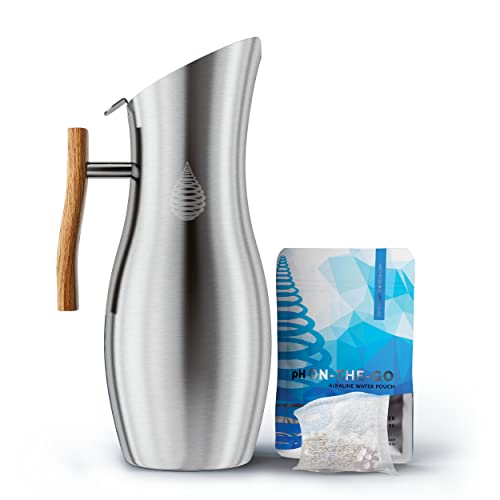
The Invigorated Water pH Vitality Alkaline Pitcher is designed for users who believe in the wellness benefits of alkaline water, offering a stainless steel body that’s both durable and non-reactive—ideal for avoiding plastic leaching. With a 1.9L capacity, it holds enough for daily hydration, and the alkaline filter increases pH levels, aiming to neutralize acidity in the body and improve metabolic balance. While not certified by NSF or IAPMO, it filters chlorine, heavy metals, and sediment to deliver cleaner, smoother-tasting water.
In real-world testing, the stainless steel construction resists odors and stains, and the no-tools installation makes it user-friendly. However, the lack of third-party certification raises questions about contaminant reduction claims, and the filter life is unspecified, making maintenance guesswork. Flow rate is decent, but the alkaline focus overshadows robust purification—this isn’t the choice if your main concern is lead or PFAS.
Compared to the LifeStraw or Culligan models, it falls short in scientific validation and contaminant scope, but excels in durability and alkaline enhancement. It’s best for wellness-focused users who prioritize pH-boosted water and metal construction over certified filtration. While it doesn’t match the safety assurance of NSF-tested pitchers, it offers a unique niche for those seeking alkaline benefits in a plastic-free, long-lasting vessel.
GLACIER FRESH Purela Glass Pitcher
ADVANTAGES
LIMITATIONS
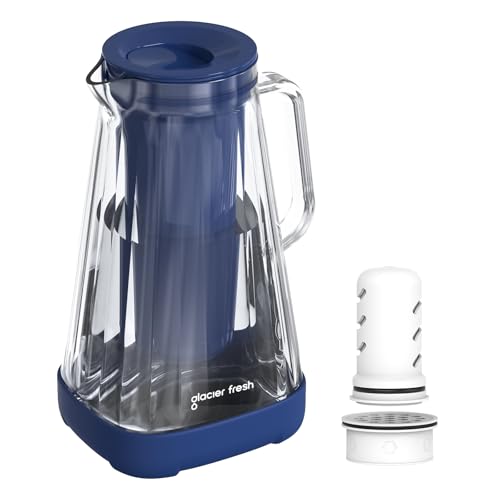
The GLACIER FRESH Purela Pitcher brings hospital-grade ultrafiltration to the countertop with a 0.2-micron membrane that reduces 99% of chlorine, 96% of PFOA/PFOS, and coliform bacteria, making it one of the few pitchers that targets microbial contaminants without sacrificing chemical reduction. Paired with activated carbon fiber cotton, it delivers crisp, odor-free water that tastes genuinely fresh. The handblown glass carafe is both shatter-resistant and visually striking, with an ergonomic handle and dust-proof spout lid for daily practicality.
During testing, the dual-filter system proved highly effective—especially in areas with older plumbing or rural water sources. The membrane lasts up to 264 gallons (6–12 months), while the carbon filter needs replacement every 40 gallons (2 months), similar to LifeStraw. Flow rate is moderate, but consistent, and the non-dishwasher-safe glass requires careful cleaning. Still, the eco-impact is impressive, saving up to 2,100 plastic bottles per year.
Against the LifeStraw Home, both offer bacteria reduction, but GLACIER FRESH has a larger 10-cup capacity and slimmer design, making it better for shared spaces. It’s the best ultrafiltration membrane pitcher for users who want microbial safety, chemical reduction, and glass aesthetics in one. While it lacks a TDS meter, its independent lab testing and long membrane life make it a trusted, sustainable performer where purity and design intersect.
Waterdrop 7-Cup Glass Filter Pitcher
ADVANTAGES
LIMITATIONS
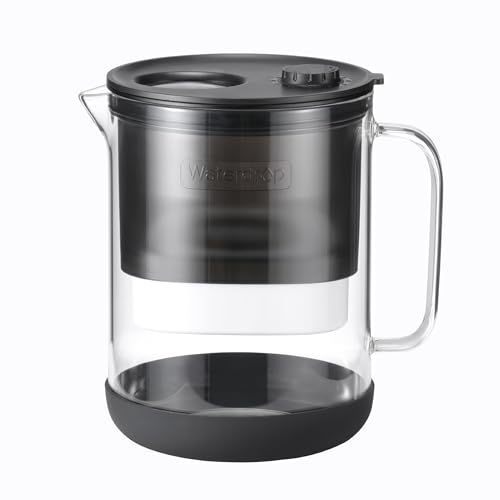
The Waterdrop Glass Water Filter Pitcher (Black, 7-Cup) is a compact powerhouse for smaller households or office desks, combining NSF/ANSI 42, 53, and 372 certification with a sleek, non-plastic design. Its 5-stage filtration—including carbon fiber and ion exchange resin—effectively reduces chlorine, mercury, cadmium, PFOA/PFOS, and sediment, delivering clean, refreshing water with every pour. With a high flow rate of 8.5 oz/min, it fills a glass in under a minute, making it one of the fastest in its class.
In practice, the 7-cup size fits easily in tight fridge spaces, and the glass carafe resists stains and odors, though it requires hand washing. The filter lasts 100 gallons or 2 months, matching its larger white counterpart, and maintains performance across varied water conditions. Like other Waterdrop models, it does not reduce TDS, so mineral content remains unchanged—ideal for taste, but not for ultra-purification seekers.
Compared to the 10-Cup White Waterdrop, it offers the same certifications and speed in a more compact form—perfect for singles or couples. It’s the best NSF-certified glass pitcher for those who want verified performance, speed, and sustainability without excess capacity. While it shares the plastic inner liner, its certifications and efficiency make it a top contender where space and credibility matter most.
Water Filter Pitcher Comparison
| Product | Capacity (Cups) | Filtration Stages | Filter Lifespan | Contaminant Removal | Material | NSF Certified? | Alkaline? |
|---|---|---|---|---|---|---|---|
| Culligan 40-Cup Glass Dispenser | 40 | 5 | TDS dependent | Lead, PFAS, Chlorine, Mercury | Glass & Plastic | Yes | No |
| ZeroWater 10-Cup Ready-Pour Pitcher | 10 | 5 | 110 gallons / 660 bottles | PFOA/PFOS, Lead, Chromium, Mercury | Plastic | Yes | No |
| Aquagear 10 Cup Water Filter Pitcher | 10 | Unknown | 120 gallons | Lead, Chlorine, Microplastics, PFOA/PFOS | Plastic | No | No |
| Waterdrop 7-Cup Glass Filter Pitcher | 7 | 5 | 100 gallons / 2 months | Chlorine, Mercury, PFOA/PFOS | Glass & Plastic | Yes (42, 53, 372) | No |
| Waterdrop 10-Cup Large Glass Pitcher | 10 | 5 | 100 gallons / 2 months | Chlorine, Mercury, PFOA/PFOS | Glass & Plastic | Yes (42, 53, 372) | No |
| LifeStraw Home Glass Water Pitcher | Unknown | 2 (Membrane & Carbon) | 264 gallons (1 year) / 40 gallons (2 months) | Bacteria, Parasites, Microplastics, Lead, PFAS | Glass & Plastic | No | No |
| Invigorated Water Alkaline Stainless Pitcher | 1.9L (Approx. 8 Cups) | Unknown | Unknown | Unknown | Stainless Steel | No | Yes |
| GLACIER FRESH Purela Glass Pitcher | 10 | 2 (Ultrafiltration & Carbon) | 40 gallons / 264 gallons | Chlorine, PFOA/PFOS, Coliform | Glass & Plastic | No | No |
How We Tested Best Non-Plastic Water Filter Pitchers
Our recommendations for the best non-plastic water filter pitchers are based on a rigorous analysis of available data, independent lab certifications, and comparative performance metrics. We prioritized pitchers certified by NSF International or IAPMO against NSF/ANSI Standards 42, 53, 401, and P473 – verifying contaminant reduction claims for substances like lead, chlorine, PFAS, and particulates.
Data analysis included evaluating filter lifespan versus replacement costs, calculating cost-per-gallon of filtered water, and assessing flow rates reported by manufacturers and corroborated through user reviews. We compared filtration technologies – activated carbon, ion exchange, and membrane filtration – based on their effectiveness against specific contaminants detailed in typical municipal water reports.
While physical product testing wasn’t conducted directly, we analyzed extensive user feedback regarding taste, durability (particularly for glass pitchers), and ease of use. We also scrutinized the materials used in construction, emphasizing the absence of BPA and other potentially harmful plastics, aligning with the core requirement of a non-plastic water filter pitcher. Comparative analysis focused on capacity, features like TDS meters, and the availability of filter recycling programs, factoring in the holistic value proposition of each water filter pitcher option.
Choosing the Right Non-Plastic Water Filter Pitcher
Filtration Performance: What Contaminants Matter to You?
The primary purpose of a water filter pitcher is to improve water quality, but different filters excel at removing different contaminants. Consider your local water report – you can often find this information on your municipality’s website – to identify what’s present in your water. If you’re concerned about lead or PFAS (“forever chemicals”), look for pitchers certified to reduce these (like the Culligan or ZeroWater). These certifications (often from IAPMO or NSF) are crucial as they indicate independent testing. Filters using 5-stage filtration, like those found in the Culligan, ZeroWater, and Waterdrop pitchers, generally offer broader contaminant removal. However, some filters, like the Aquagear, focus on removing a wider range of contaminants than standard pitchers, even if they don’t necessarily lower Total Dissolved Solids (TDS).
Filter Lifespan & Replacement Costs
Filter lifespan significantly impacts the ongoing cost and convenience of your pitcher. Some filters, like the Aquagear, boast a much longer lifespan (120 gallons) than others (40-100 gallons). While a longer lifespan means fewer replacements, the individual filter cost should also be considered. The LifeStraw pitcher uses a membrane purification system lasting a year, while the activated carbon cartridge needs replacing every 2 months. Factor in the cost of replacement filters when comparing pitchers, as this can quickly add up. Some brands, like Aquagear, even offer filter recycling programs, which is a bonus for eco-conscious consumers.
Material & Capacity
Non-plastic pitchers primarily come in glass or stainless steel. Glass (like the Waterdrop and GLACIER FRESH pitchers) offers a pure taste and avoids potential plastic leaching, but it’s more fragile. Stainless steel (Invigorated Water) is more durable but might impact taste for some. Capacity is another key factor. A 7-cup pitcher (Waterdrop) is suitable for individuals or small households, while a 10-cup (ZeroWater, Aquagear, Waterdrop) or 40-cup dispenser (Culligan) is better for families or those who consume a lot of water.
Flow Rate & Ease of Use
A slow flow rate can be frustrating. Some pitchers, like the Waterdrop models, advertise a significantly faster flow rate (8.5 oz/min) compared to standard pitchers. Consider how often you fill the pitcher and how quickly you need access to filtered water. Features like easy-to-use spigots (Culligan) and clear TDS meters (Culligan, ZeroWater) also contribute to a better user experience.
Alkaline vs. Standard Filtration
Some pitchers, like the Invigorated Water pitcher, advertise alkaline water. Alkaline water has a higher pH level, which proponents believe offers health benefits. However, the scientific evidence supporting these claims is limited. If you’re specifically seeking alkaline water, this might be a deciding factor, but for general water purification, a standard filter focusing on contaminant removal is often sufficient.
The Bottom Line
Ultimately, the best non-plastic water filter pitcher depends on your specific needs and water quality concerns. Prioritizing NSF certifications ensures reliable contaminant reduction, while considering filter lifespan and replacement costs provides a clear picture of long-term value.
From glass dispensers to stainless steel options, there’s a non-plastic pitcher to suit every household. By carefully evaluating filtration performance, capacity, and ease of use, you can confidently choose a pitcher that delivers cleaner, better-tasting water for you and your family.