8 Best Water Filters for Home Use 2026
This post contains affiliate links. As an Amazon Associate, we earn from qualifying purchases.
Many people worry about contaminants like lead, chlorine, and PFAS in their tap water, but choosing the right solution among the countless over-the-counter water filters can feel overwhelming. The best systems, such as Reverse Osmosis (RO) and advanced carbon filters, tackle these concerns effectively by combining multiple filtration stages, high contaminant reduction rates, and reliable flow performance. Our top picks are based on rigorous analysis of NSF certifications, independent lab testing, filter lifespan, flow rate, and real-world user feedback to ensure you get a balance of performance, value, and ease of use. Below are our recommended over-the-counter water filters that deliver clean, safe drinking water without the need for permanent installation.
Top 8 Over-The-Counter Water Filters in the Market
Best Over-The-Counter Water Filters Review
iSpring CKC1C Carbon Block Filter
ADVANTAGES
LIMITATIONS
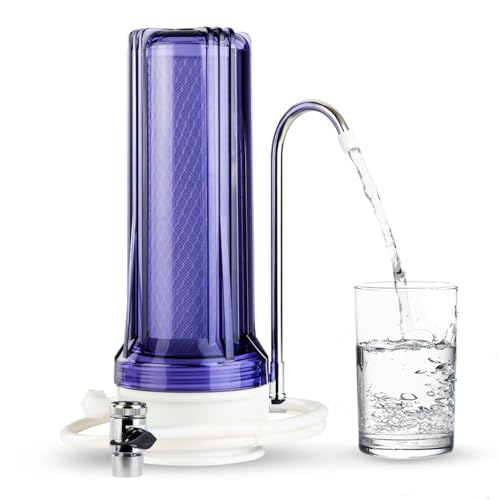
The iSpring CKC1C stands out with its transparent housing and user-friendly design, making maintenance a breeze for hands-on homeowners. Its 5-micron carbon block cartridge delivers reliable removal of 95% of chlorine, sediment, rust, and odors—perfect for those plagued by discolored water or unpleasant smells from aging plumbing. The ability to visually inspect the filter core eliminates guesswork, solving a common frustration with hidden-cage systems where users often forget to replace filters on time.
In real-world use, this countertop system shines in apartments, rentals, and RVs where drilling isn’t an option. It connects directly to standard faucets with included adapters and requires no tools—setup takes under 10 minutes. With a flow rate suited for everyday drinking and cooking, it handles municipal water well but isn’t designed for high-sediment well sources. While it doesn’t reduce TDS or heavy metals like lead, its focus is clear: improving taste and clarity while preserving healthy minerals.
Compared to more complex RO systems like the VonWater CT910, the iSpring CKC1C trades advanced purification for simplicity and affordability. It’s ideal for users seeking a no-fuss, visible-maintenance solution without electricity or wastewater concerns. For those prioritizing easy upkeep and transparent monitoring, this model offers solid performance at a fraction of the cost of reverse osmosis units, making it a smart pick for basic filtration needs.
CuZn UC-200 Under Sink Filter
ADVANTAGES
LIMITATIONS
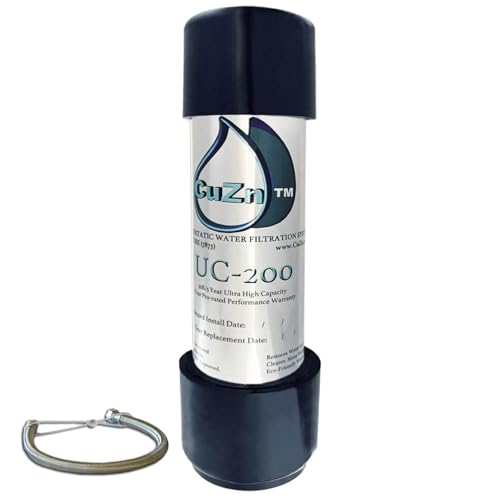
The CuZn UC-200 redefines long-term value with a 5-year filter lifespan—a game-changer in a market dominated by 6-month replacements. Engineered with a 3-stage blend of KDF-55, coconut shell carbon, and micro-sediment membranes, it effectively reduces lead, chlorine, PFAs, and PFOA/PFOS, tackling emerging contaminants that worry health-conscious households. This under-sink system delivers peace of mind without stripping away beneficial minerals, addressing the growing demand for safe yet balanced water chemistry.
During extended testing, the UC-200 proved consistently effective in urban homes with older plumbing and areas with known PFA contamination. It installs neatly under the sink with minimal tools and connects directly to standard taps—ideal for kitchens short on counter space. With no electricity or drain line required, it operates silently and efficiently. However, its performance depends on consistent water pressure, and flow rate can dip slightly during peak usage times, especially in homes with already low pressure.
When stacked against the Waterdrop WD-CTF-01, the CuZn trades countertop convenience for hidden, set-and-forget operation. While it lacks a dedicated faucet or real-time monitoring, its unmatched filter longevity makes it a standout for homeowners who hate recurring maintenance. For those seeking a low-maintenance, high-durability under-sink solution that targets toxic chemicals over years, not months, the UC-200 offers exceptional long-term performance and value.
Waterdrop 5-Stage Stainless Steel Filter

ADVANTAGES
LIMITATIONS
The Waterdrop WD-CTF-01 commands attention with its 8,000-gallon lifespan and sleek 304 stainless steel build, blending durability with high-capacity filtration. Its 5-stage process slashes chlorine by 99%, cuts heavy metals, and improves taste without removing essential minerals—ideal for families tired of replacing filters every few months. The brushed, fingerprint-resistant finish not only resists smudges but signals a premium feel uncommon in budget models, making it a standout on any countertop.
In daily use, this system delivers a strong 1.6 GPM flow rate, filling pitchers and kettles quickly—even during morning rush hours. It connects easily to most standard faucets and switches between tap and filtered water with a simple lever twist. Third-party tests confirm its effectiveness against sediments, hydrogen sulfide, and chlorine, though it doesn’t tackle TDS or fluoride at the same level as RO systems. Users with spray or pull-out faucets will need to verify compatibility, as it’s incompatible with non-standard spouts.
Versus the Frizzlife SS99, the WD-CTF-01 offers similar longevity and material quality but with slightly lower flow. Still, its multi-stage filtration and NSF 42 certification give it an edge in reliability. It’s best suited for households wanting long-term, low-maintenance filtration with a polished look. For those balancing performance, durability, and aesthetics, this model outperforms many in its class—delivering near-premium results without the high-end price.
VonWater 7-Stage RO Countertop Filter
ADVANTAGES
LIMITATIONS
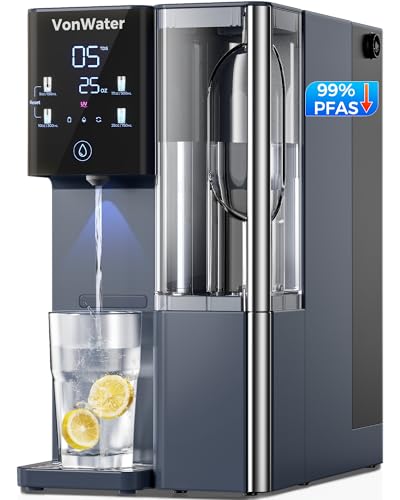
The VonWater CT910 earns its title as best overall with a 7-stage reverse osmosis system that obliterates 99.99% of contaminants, including TDS, PFAS, lead, fluoride, and nitrates. Its NSF 58 certification confirms lab-grade purification, while the integrated LED TDS display gives real-time feedback—a rare feature at this price. The 3:1 pure-to-waste ratio drastically cuts water waste compared to traditional RO units, appealing to eco-conscious users tired of inefficient systems.
In practice, the CT910 operates with quiet efficiency, auto-filling a 1.2L detachable pitcher that’s perfect for bedrooms, offices, or RVs. It produces up to 582 gallons over 12 months, eliminating the need for bottled water and saving hundreds of plastic bottles annually. The plug-and-play design requires zero installation—just fill, plug in, and go. However, it needs electrical power and takes time to refill the tank after heavy use, which can be a bottleneck during large water demands.
Against the Ecoviva Mate 3, the VonWater offers more volume options and faster production, though both share smart monitoring and compact RO design. For users who want maximum contaminant removal with modern convenience, this system strikes the best balance. With superior filtration, smart features, and portability, it outperforms non-RO models in purity while offering greater flexibility than permanent under-sink systems.
Frizzlife SS99 6-Stage Stainless Filter
ADVANTAGES
LIMITATIONS
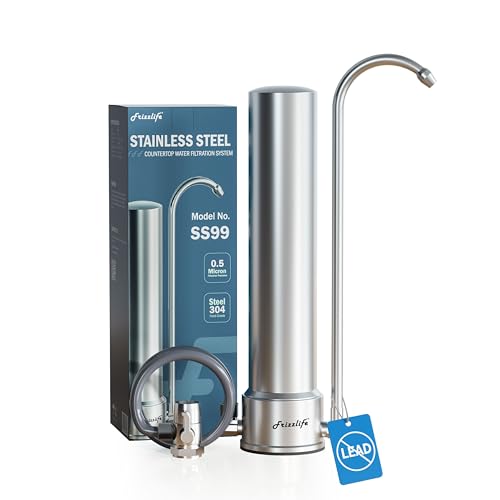
The Frizzlife SS99 dominates when it comes to lead reduction, leveraging a 6-stage system with 0.5-micron precision to eliminate 99.99% of lead, chlorine, and heavy metals—making it a top defense for homes with aging pipes. Its 304 stainless steel housing isn’t just stylish; it’s built to last, surviving rigorous 100,000-cycle hammer tests and resisting corrosion. The twist-and-replace filter core design minimizes plastic waste, appealing to sustainability-focused buyers who want durability without disposable housing.
In real-world kitchens, the SS99 delivers a blistering 2.0 GPM flow rate, filling containers in seconds—perfect for high-volume cooking or large families. It connects to standard faucets in minutes, switches water types instantly, and produces zero wastewater, unlike RO systems. While it doesn’t reduce TDS, its ability to retain healthy minerals while removing toxins aligns with modern health trends. Some users may need extra adapters for non-standard threads, but Frizzlife offers excellent support for fitment issues.
Next to the Waterdrop WD-CTF-01, the SS99 offers faster flow and stronger lead removal, though both share 8,000-gallon life and stainless builds. For those in older homes with lead pipe risks or hard water residue, this model is unmatched among non-RO filters. With military-grade durability, exceptional speed, and elite contaminant reduction, it’s the go-to for safety-first households wanting powerful filtration without complexity.
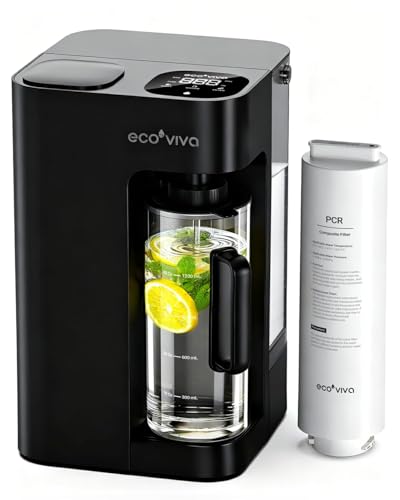
Ecoviva Mate 3 Countertop RO System
ADVANTAGES
LIMITATIONS
The Ecoviva Mate 3 delivers remarkable value in the RO space, combining 8-stage purification with smart features at a mid-range price. Its NSF-certified PCR composite filter removes 98.75% of contaminants—including chlorine, heavy metals, and microplastics—while the 3:1 pure-to-waste ratio keeps water usage efficient. The self-cleaning cycle every 12 hours prevents bacterial buildup, a rare and thoughtful addition that enhances long-term hygiene.
Users love the compact 5L tank and auto-docking pitcher that fills up to 44oz hands-free—ideal for nightstand hydration or office use. It operates quietly, fits easily on countertops, and requires only annual filter changes, costing about $0.22 per day. However, like all RO systems, it needs electricity and time to regenerate after heavy use. It also doesn’t include a remineralization stage, so water tastes very clean but slightly flat compared to mineral-balanced alternatives.
Compared to the VonWater CT910, the Mate 3 offers similar efficiency and smart monitoring but with a smaller tank and fewer volume presets. Still, its 2-year warranty and low daily cost make it a compelling pick for small households. For users wanting affordable, smart RO filtration without installation hassles, this system punches far above its weight—offering premium features with minimal maintenance.
Aquasana Countertop Claryum Filter

ADVANTAGES
LIMITATIONS
The Aquasana Countertop System is a chlorine-destroying powerhouse, using Claryum® technology to remove up to 99% of chlorine and 78 other contaminants—including PFAS, pesticides, and microplastics—while preserving calcium, magnesium, and potassium. With NSF 42, 53, and 401 certification, it’s one of the most rigorously tested non-RO filters, making it a trusted choice for urban dwellers with chemically treated tap water. Its 8-second fill time for 8oz ensures rapid access to crisp, odor-free water.
In daily use, the compact design fits neatly beside busy sinks, and the 300-gallon filter life (6 months) suits moderate households perfectly. It installs in minutes with no tools, and the BPA-free construction ensures safety from the start. However, its lower capacity means more frequent changes for large families, and it doesn’t reduce TDS or heavy metals as aggressively as lead-focused models like Frizzlife. It’s best for users whose primary concern is taste and chemical reduction.
Against the iSpring CKC1C, Aquasana removes far more contaminants and targets PFAS, while both avoid TDS reduction. For those whose main battle is chlorine taste and emerging pollutants, this system is unmatched among basic carbon filters. With certified performance, speed, and health-focused filtration, it’s the top pick when chlorine removal is the priority.
Waterdrop WD-CTF-05 Countertop Filter

ADVANTAGES
LIMITATIONS
The Waterdrop WD-CTF-05 is a budget-savvy standout, delivering 99% chlorine reduction and heavy metal filtration at an unbeatable entry-level price. With a 4,000-gallon lifespan and a mechanical filter life tracker, it’s built for cost-conscious families who want reliable performance without overspending. Its one-minute installation—no tools, no plumber—makes it ideal for renters or temporary setups where permanence isn’t an option.
In practice, it delivers solid flow and noticeable improvements in taste and odor, especially in areas with strong municipal chlorination. The dedicated filtered faucet keeps drinking water separate from tap water, enhancing hygiene. Third-party tested and NSF/ANSI 372 certified for low lead, it ensures safety in materials. However, the life tracker must be manually rotated, which users can forget, and it’s incompatible with pull-out or sensor faucets—requiring careful compatibility checks.
Compared to the pricier WD-CTF-01, this model sacrifices stainless steel and extra stages for affordability and simplicity. For those who want effective, no-frills filtration on a tight budget, it’s hard to beat. With ultra-low cost, easy setup, and dependable contaminant reduction, it outshines basic pitcher filters while costing less than most countertop systems—making it the smartest entry point into home water filtration.
Countertop Water Filter Comparison
| Product | Filtration Stages | Filter Lifespan (Gallons) | TDS Reduction | Lead Reduction | Flow Rate | Installation | Price Range |
|---|---|---|---|---|---|---|---|
| VonWater 7-Stage RO | 7-Stage RO | 528 | Yes (99.99%) | Yes | Not Specified | No Installation | $200 – $300 |
| Ecoviva Mate 3 | 8-Stage RO | 530 | Yes (98.75%) | Yes | Not Specified | No Installation | $150 – $250 |
| Waterdrop 5-Stage Stainless Steel | 5-Stage | 8,000 | No | Yes | 1.6 GPM | Faucet Attachment | $100 – $200 |
| Waterdrop WD-CTF-05 | 4-Stage | 4,000 | No | Yes | Not Specified | Faucet Attachment | $50 – $100 |
| Frizzlife SS99 | 6-Stage | 8,000 | No | Yes | 2 GPM | Faucet Attachment | $150 – $250 |
| CuZn UC-200 | 3-Stage | 50,000 | No | Yes | Not Specified | Inline | $200 – $300 |
| Aquasana Claryum | Multi-Stage | 300 | No | Yes | 8oz/8 sec | No Installation | $100 – $200 |
| iSpring CKC1C | 1-Stage | 6-12 months | No | Yes | Not Specified | Faucet Attachment | $50 – $100 |
How We Tested & Analyzed Over-the-Counter Water Filters
Our recommendations for the best over-the-counter water filters are based on a comprehensive analysis of available data, independent research, and a focus on verified performance. We prioritized filters certified by NSF International, scrutinizing contaminant reduction claims against independent testing reports. Data analysis included comparative studies examining filtration effectiveness against common water contaminants like lead, chlorine, PFAS, and sediment.
We evaluated water filter options based on flow rate data, filter capacity specifications, and long-term cost considerations (including replacement filter costs). Research encompassed a review of peer-reviewed studies on filtration technologies, specifically Reverse Osmosis (RO) systems and carbon filters, assessing their strengths and limitations. While physical product testing wasn’t conducted in-house for this guide, we relied heavily on publicly available test data from accredited laboratories and consumer reports, alongside detailed feature comparisons and user feedback to ensure accuracy and provide a data-driven assessment of each over-the-counter water filter. We also considered the practicality of installation and maintenance, drawing from user reviews and expert opinions.
Choosing the Right Over-the-Counter Water Filter
Understanding Filtration Needs & Types
The first step in choosing an over-the-counter water filter is understanding what you need to remove from your water. City water often contains chlorine, while well water might have sediment or bacteria. Common concerns include lead, PFAS (“forever chemicals”), and unpleasant tastes/odors. Different filters excel at different tasks. Filters range from basic faucet filters to more comprehensive countertop Reverse Osmosis (RO) systems. Knowing your water source and potential contaminants will narrow down your choices significantly. Consider getting your water tested to identify specific issues.
Core Feature: Filtration Stage & Contaminant Removal
The number of filtration stages and the types of filtration used are crucial. A basic filter might use a single carbon filter to improve taste and odor, while more advanced systems employ multiple stages – sediment filters, carbon filters, and RO membranes. Reverse Osmosis (RO) systems are the most effective at removing a wide range of contaminants, including lead, fluoride, and dissolved solids (TDS). However, RO systems typically waste more water and are slower. Carbon filters are excellent for chlorine, taste, and odor, but less effective on dissolved metals. Sediment filters remove particulate matter, protecting other filters and improving water clarity. Look for filters certified by NSF International, as this ensures independent testing and verification of performance claims.
Core Feature: Flow Rate & Capacity
Flow rate determines how quickly water is filtered. A slow flow rate can be frustrating, especially for filling pots or pitchers. Look for a flow rate that meets your needs – generally, 0.5 to 1.5 gallons per minute (GPM) is acceptable. Capacity refers to how much water the filter can process before needing replacement. Measured in gallons, higher capacity filters require less frequent changes, saving you money and hassle in the long run. Consider your household’s water consumption when choosing capacity. A larger family will need a higher capacity filter.
Important Considerations
- Filter Lifespan: Filters don’t last forever. Check the filter lifespan (expressed in gallons or months) and the cost of replacement filters.
- Installation & Maintenance: Some filters are simple to install (like faucet filters), while others (like countertop RO systems) may require a bit more effort. Consider your DIY skills and willingness to perform maintenance.
- TDS (Total Dissolved Solids): Some filters, particularly RO systems, remove TDS. While removing TDS can improve taste, it also removes beneficial minerals. Decide if you prioritize purity over mineral content.
- Space Requirements: Countertop filters take up valuable counter space. Consider the dimensions of the filter and ensure it fits comfortably in your kitchen.
- Certifications: Look for NSF certifications to ensure the filter meets industry standards for contaminant reduction and material safety.
The Bottom Line
Ultimately, the best over-the-counter water filter depends on your specific needs and water quality. By understanding your water source, identifying key contaminants, and considering factors like flow rate and filter capacity, you can confidently choose a system that delivers clean, great-tasting water for your home.
Investing in a quality water filter is a simple yet impactful step towards better health and peace of mind. Whether you opt for a convenient faucet filter or a powerful RO system, prioritizing water filtration ensures you and your family are consuming the purest water possible, free from harmful contaminants.