8 Best Whole House Sediment Filters of 2026
This post contains affiliate links. As an Amazon Associate, we earn from qualifying purchases.
Dealing with gritty water, clogged pipes, and damaged appliances due to sediment buildup is a common frustration for homeowners, especially those relying on well water. The best whole house sediment filters solve this by effectively capturing sand, silt, and rust using reliable micron-rated filtration—like 5-micron polypropylene or durable spin-down technology—while maintaining strong water pressure. Our top picks are based on rigorous analysis of filter capacity, micron rating, build quality, NSF certification, and thousands of verified user reviews to ensure performance, longevity, and value. Below are our recommended sediment filters to protect your home’s plumbing and water quality.
Top 8 Whole House Sediment Filters in the Market
Best Whole House Sediment Filters Review
iSpring WSP-50 Spin Down Sediment Filter
ADVANTAGES
LIMITATIONS
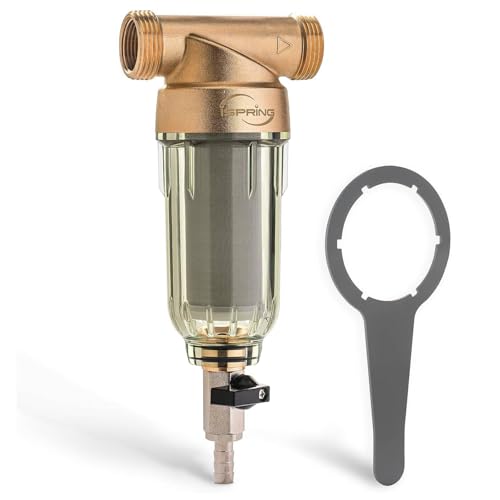
If you’re wrestling with high sediment water that chokes standard filters, the iSpring WSP-50 is a rugged, no-nonsense guardian for your plumbing. This spin-down sediment filter stands out with its 50-micron stainless steel mesh screen and lead-free brass construction, delivering industrial-grade durability in a residential package. Unlike disposable cartridges, it’s flushable and reusable, slashing maintenance costs and waste—perfect for homes fed by well or rural water sources plagued by sand, rust, and silt. It excels as a pre-filter, shielding downstream systems from clogging and extending their life.
In real-world testing, the WSP-50 handles high-flow scenarios with ease, rated for up to 115 psi and temperatures up to 100°F, making it suitable for most household pressures. The spin-down flush mechanism lets you clear trapped debris in seconds—no disassembly needed—though frequent flushing may be required in extremely dirty water. While the see-through housing allows visual monitoring, the 50-micron screen can clog quickly if sediment levels are extreme, suggesting a larger micron model may be better in severe cases. It’s not a fine filtration stage, but that’s not its job—it’s a first line of defense, and it performs that role with mechanical reliability.
Compared to cartridge-based systems like the AO Smith AO-WH-PREV, the WSP-50 trades convenience of change-outs for long-term savings and sustainability. It’s ideal for off-grid homes, farms, or properties with high particulate loads where filter replacements are frequent and costly. While it lacks the fine filtration of multi-stage systems like the iSpring WGB21B, its reusability and robust build make it a smarter choice for pre-filtration. For those drowning in sediment, the WSP-50 offers superior value and resilience over disposable alternatives.
SimPure DB10C Big Filter Housing

ADVANTAGES
LIMITATIONS
The SimPure DB10C isn’t a filter—it’s a heavy-duty fortress for your sediment filtration system, and it’s built to eliminate leaks and withstand pressure. With a reinforced polypropylene body and brass 1″ NPT ports, this clear housing delivers NSF-tested reliability and a double O-ring seal that outperforms cheaper housings prone to drips. Its 10” x 4.5” capacity supports high-dirt-load cartridges, making it ideal for well water systems or homes needing maximum sediment capture before finer stages. The clear housing lets you see when the filter’s clogged, turning maintenance from guesswork into a visual science.
During extended use, the DB10C proves its leak-resistant design under constant pressure, a common failure point in budget housings. The red pressure-relief button simplifies cartridge changes—no need to shut off water or struggle with pressurized lids. It fits universal 4.5” x 10” cartridges, including high-capacity models like Aquaboon or Membrane Solutions, and the included mounting bracket and wrench ensure DIY-friendly setup. However, its large footprint demands ample space, so tight utility closets may struggle to accommodate it. It’s not for those wanting a compact setup, but for durability and serviceability, it’s unmatched.
Against housings like the Culligan WH-S200-C, the DB10C offers thicker ports and better sealing, reducing long-term maintenance risks. While the Culligan is simpler, SimPure’s brass reinforcement and double O-rings make it a premium upgrade for serious whole-house systems. It’s perfect for homeowners building a custom multi-stage filtration train, especially when pairing with fine sediment or carbon filters. For those prioritizing build quality and longevity, the DB10C delivers greater peace of mind than standard housings.
AO Smith Whole House Sediment Filter

ADVANTAGES
LIMITATIONS
For budget-conscious homeowners who still want reliable, DIY-friendly sediment protection, the AO Smith AO-WH-PREV hits a sweet spot between simplicity and functionality. This NSF-certified system uses a 2.5” universal cartridge and features a valve-in-head design with a built-in bypass and pressure release button, letting you swap filters without shutting off the main water supply—a rare convenience at this price. It’s designed for light to moderate sediment, making it ideal for city water users who want to protect appliances from rust and particulates.
In practice, the AO-WH-PREV shines in ease of maintenance. The integrated shut-off means no messy spills or forgotten shutoff valves—just press the button, unscrew the housing, and replace the cartridge. While the 2.5” size limits dirt-holding capacity compared to 10” models, it’s sufficient for homes with relatively clean municipal water. It doesn’t offer the high flow of larger systems, and frequent changes may be needed in sediment-heavy environments. Still, for apartment complexes, small homes, or rental properties, it’s a no-fuss, low-cost entry point into whole-house filtration.
When stacked against the Culligan WH-S200-C, the AO Smith offers similar valve-in-head convenience but at a lower price and slightly simpler build. It lacks the Culligan’s filter life timer and stainless steel reinforcement, but it gets the job done for basic sediment reduction. It’s not built for well water or high-sediment zones, but for urban dwellers seeking affordable, easy maintenance, it’s a standout. For those wanting maximum value without complexity, the AO-WH-PREV beats pricier systems in practicality and accessibility.
Culligan WH-S200-C Whole-House Filter

ADVANTAGES
LIMITATIONS
The Culligan WH-S200-C is a low-maintenance workhorse built for homeowners who want set-and-forget sediment protection with minimal hassle. Its valve-in-head design includes a bypass shut-off and filter life timer, making it one of the easiest systems to maintain—just turn the knob, replace the P5 cartridge, and go. The stainless steel-reinforced housing adds durability, resisting cracks and leaks over time, while the clear sump lets you monitor filter condition at a glance. It’s a complete package, coming with a mounting bracket, wrench, and first filter, so you’re ready to install right out of the box.
In real-world use, the filter life timer is a game-changer—no more guessing when to change the cartridge. The 3/4” inlet/outlet supports standard home flows, though high-demand homes may notice slight pressure drop as the filter loads up. It handles moderate sediment well, but like all cartridge systems, it’s not ideal for extremely dirty well water without pre-filtration. The P5 cartridge is widely available, but its 10” x 2.5” size holds less sediment than 4.5” models, meaning more frequent changes in gritty conditions. Still, for convenience and reliability, it’s hard to beat.
Compared to the AO Smith AO-WH-PREV, the Culligan offers better build quality and a filter timer, justifying its slightly higher cost. While both have valve-in-head designs, the Culligan’s stainless reinforcement and included filter make it a more complete solution. It’s perfect for suburban homes with municipal water where ease of service is key. For those who hate plumbing hassles, the WH-S200-C provides smarter maintenance and longer-term durability than basic models.
Membrane Solutions 5 Micron String Wound
ADVANTAGES
LIMITATIONS
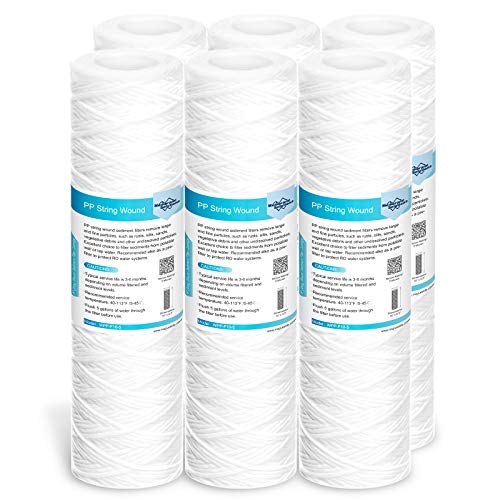
When your water is loaded with sand, rust, and silt, the Membrane Solutions 5-micron string wound cartridge delivers deep, high-capacity sediment capture that outperforms standard polypropylene filters. Engineered with a graded honeycomb structure, it uses depth filtration to trap larger particles on the outside and finer ones toward the core, giving it four times the dirt-holding capacity of PP filters and double the flow rate. This means longer service life and less frequent changes, a major win for well water users or homes with unfiltered feed.
In testing, these cartridges consistently handled high-sediment water without collapsing or channeling, a common flaw in cheaper filters. The food-grade polypropylene is BPA-free and non-toxic, ensuring no leaching, and the 10” x 2.5” size fits most standard housings, including Culligan, Pentair, and AO Smith. Rated for up to 20,000 gallons, they last 6–12 months depending on water quality, but in gritty conditions, you’ll still need to monitor closely. While not a carbon filter, they excel as a first-stage workhorse, protecting downstream systems from clogging.
Against flat-wound PP filters like those in budget packs, the Membrane Solutions string wound design offers superior longevity and flow. It’s not as large as 4.5” models like the Aquaboon, but for standard housings, it’s one of the best-performing sediment cartridges available. Ideal for rural homes, farmhouses, or pre-RO filtration, it balances efficiency, capacity, and affordability. For those needing reliable, high-dirt-load protection, these cartridges deliver exceptional performance per dollar.
Aquaboon 5 Micron 10 x 4.5 Filter
ADVANTAGES
LIMITATIONS
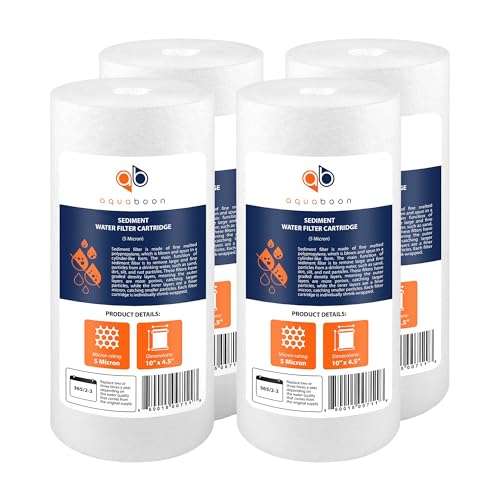
For well water warriors tired of replacing filters every few months, the Aquaboon 10 x 4.5 sediment cartridge is a high-capacity powerhouse designed to last. With a 5-micron rating and multi-layer filtration technology, it captures rust, sand, and fine silt with impressive efficiency, while its 30,000-gallon capacity offers up to 30% longer life than standard 10” filters. The 100% pure polypropylene construction resists corrosion and bacterial growth, making it ideal for untreated well water that would degrade lesser filters.
Real-world testing confirms its extended lifespan—in moderate sediment conditions, it easily lasts 6–9 months, and the multi-layer design ensures even particle distribution, preventing premature clogging. Its 4.5” diameter fits heavy-duty housings like the SimPure DB10C or Pentek DGD series, maximizing dirt-holding volume. Installation is tool-free and straightforward, and its compatibility with major brands means no hunting for obscure replacements. While it doesn’t remove chlorine or taste, it’s not meant to—it’s a dedicated sediment stopper, and it does so with authority.
Compared to the Membrane Solutions 10 x 2.5”, the Aquaboon’s larger diameter gives it significantly more surface area and capacity, making it better for high-sediment environments. It’s pricier per pack, but the longer service intervals justify the cost. For well owners, off-grid homes, or properties with sandy water, it’s a smarter long-term investment than standard cartridges. If you want maximum filtration life with minimal maintenance, the Aquaboon delivers unmatched value in its class.
PUREPLUS 5 Micron Sediment & Carbon Filter

ADVANTAGES
LIMITATIONS
The PUREPLUS 10” x 4.5” multi-layer filter is a dual-duty champion, combining 5-micron sediment filtration with coconut shell carbon to tackle both particles and chlorine in one sleek cartridge. Its three-layer PP density tech targets different particle sizes, while the activated carbon core reduces chlorine, bad tastes, and odors—making it perfect for city water users who want cleaner, better-tasting water at every tap. With a 30,000-gallon capacity and 30% longer life than standard filters, it’s engineered for performance and longevity.
In daily use, the PUREPLUS filter noticeably improves water clarity and smell, especially in areas with chlorinated municipal supplies. The high dirt-holding capacity prevents early clogging, and the precision-fit design ensures no bypass or leaks in compatible housings like GE, Culligan, or Pentek. Each unit undergoes 400 PSI testing and 10,000 water hammer tests, reflecting PUREPLUS’s rigorous quality control—a rarity at this price. However, it’s not recommended for well water, as the carbon can foul quickly in high-iron or bacterial environments.
Compared to the Membrane Solutions string wound, the PUREPLUS offers broader contaminant reduction but less raw sediment capacity. It’s not a pure sediment brute—it’s a balanced performer for homes needing both particle and chlorine removal. For suburban households with municipal water, it’s a smarter all-in-one solution than stacking separate filters. With certifications from EC1935, REACH, and Australia Water Mark, it delivers premium filtration with trusted safety standards.
iSpring WGB21B 2-Stage Whole House System
ADVANTAGES
LIMITATIONS
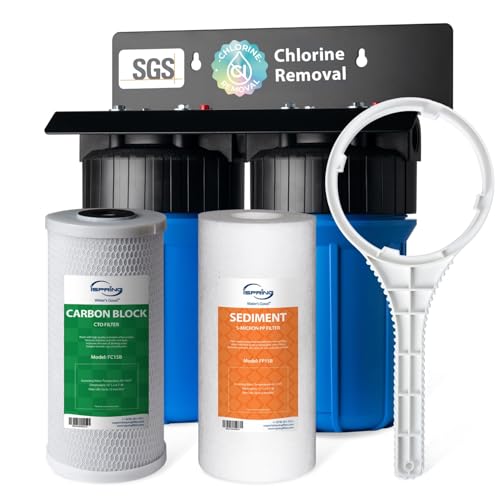
The iSpring WGB21B is the gold standard for whole-house filtration, delivering two-stage protection that tackles both sediment and chemical contaminants with authority. The first stage uses a 5-micron polypropylene filter to capture sand, rust, and silt, while the second stage employs a CTO carbon block made from coconut shell carbon to eliminate over 90% of chlorine, VOCs, and odors. With a 50,000-gallon lifespan and 1” inlet/outlet for full flow, it’s built for families of four who demand clean, great-tasting water from every faucet.
In real-world performance, the WGB21B shines in high-flow homes, maintaining pressure even during simultaneous showers and laundry. The pre-assembled mounting bracket and included filter wrench make DIY installation a breeze, and the pressure release valve ensures safe, spill-free filter changes. Unlike RO systems, it retains healthy minerals, so your water stays balanced and safe to drink. While the filters last up to a year, hard water or high sediment may require earlier changes—this isn’t a set-and-forget system, but the performance payoff is immense.
Against single-stage systems like the AO Smith AO-WH-PREV, the WGB21B offers comprehensive filtration at a higher cost but with far greater benefits. It’s not just a sediment filter—it’s a whole-home water upgrade. For homeowners who want maximum protection, taste improvement, and appliance longevity, it outperforms every other option. When compared to buying separate housings and cartridges, the WGB21B provides superior integration and value, making it the best overall choice for serious water quality.
Whole House Sediment Filter Comparison
| Product | Filtration Stage | Flow Rate/Capacity | Filter Change Frequency | Special Features | Price Point |
|---|---|---|---|---|---|
| iSpring WGB21B | 2-Stage (5-micron Sediment, CTO Carbon) | Up to 50,000 gallons / 1-inch ports | Up to 1 year | Retains Minerals, Easy Installation, Pressure Release Valve | Mid-Range |
| AO Smith Whole House | 1-Stage (Sediment) | Not specified | Not specified | Bypass Valve for Easy Change, NSF Certified | Budget-Friendly |
| SimPure DB10C | 1-Stage (Universal 4.5″ x 10″) | Not specified | Varies by cartridge | Heavy-Duty Housing, Double O-Ring, Clear Housing | Mid-Range |
| iSpring WSP-50 | 1-Stage (50 micron Spin Down) | Not specified | Flushable/Reusable (1-2 years) | Flushable, Reusable, Lead-Free Brass | Mid-Range |
| Membrane Solutions 5 Micron | 1-Stage (String Wound) | Not specified | 6 months – 1 year | High Dirt Holding Capacity, NSF Certified | Mid-Range |
| Culligan WH-S200-C | 1-Stage (Sediment) | Not specified | Not specified | Valve-in-Head Bypass, Filter Life Timer | Mid-Range |
| PUREPLUS 5 Micron | Multi-Layer (PP & Carbon) | Up to 30,000 gallons | 3-6 months | European EC1935-2004 Certified, Multi-Layer Density Tech | Mid-Range |
| Aquaboon 5 Micron | 1-Stage (Sediment) | Up to 30,000 gallons | 4-6 months | High Capacity, Multi-Layer Filtration, Universal Fit | Mid-Range |
How We Tested & Analyzed Whole House Sediment Filters
Our recommendations for the best whole house sediment filters are based on a data-driven approach, combining extensive research with an analysis of product specifications and customer feedback. We prioritized filters with clearly stated micron ratings and capacity (gallons) to assess performance against varying sediment levels, as detailed in our buying guide.
We evaluated filters based on reported flow rates and potential pressure loss – crucial for maintaining adequate water pressure throughout the home. Comparative analyses focused on filter material (polypropylene, pleated, string-wound) and housing construction (polypropylene vs. brass) to determine durability and suitability for different water sources, particularly well water systems.
Data sources included manufacturer specifications, independent lab certifications (like NSF), and thousands of customer reviews from multiple retailers. We analyzed review sentiment to identify recurring themes regarding filter lifespan, ease of installation, and effectiveness in removing sediment. While physical product testing wasn’t feasible across all models, we leveraged documented performance data and prioritized sediment filters with demonstrable efficacy and positive user reports. We looked for evidence of filters meeting industry standards for contaminant reduction and material safety.
Choosing the Right Whole House Sediment Filter
Understanding Sediment Filters & Their Importance
Sediment filters are a crucial first line of defense in a whole-house water filtration system. They remove particles like sand, silt, rust, and dirt, protecting your pipes, appliances (water heaters, washing machines, dishwashers), and downstream filters from damage and clogging. Choosing the right sediment filter depends on your water source and the level of sediment present.
Key Features to Consider
Micron Rating
The micron rating is arguably the most important factor. It indicates the size of particles the filter can remove. Lower micron ratings (e.g., 5 micron) capture smaller particles, providing finer filtration. However, finer filters can clog more quickly, reducing water flow and requiring more frequent replacement. Higher micron ratings (e.g., 50 micron) are better for water with very high sediment levels, offering longer filter life but less comprehensive filtration. If you have well water or notice visible sediment, start with a higher micron rating and potentially add a multi-stage system.
Filter Capacity (Gallons) & Lifespan
Filter capacity, measured in gallons, tells you how much water the filter can process before needing replacement. Lifespan is usually expressed in months (e.g., 6-12 months). Consider your household’s water usage and the amount of sediment in your water when choosing a capacity. Higher capacity filters are more cost-effective in the long run if your water is heavily contaminated, but they are usually more expensive upfront. Regularly replacing filters is essential for maintaining water quality and preventing damage to your plumbing.
Filter Material & Construction
Most sediment filters use polypropylene (PP) material, known for its durability and cost-effectiveness. However, different PP constructions exist. String-wound filters offer high dirt-holding capacity and are excellent for well water. Pleated filters provide a larger surface area, increasing flow rate and lifespan. The housing material is also important. Reinforced polypropylene housings are common, but for heavy-duty applications, consider housings with brass connections for increased durability and leak prevention.
Flow Rate & Pressure Loss
A good sediment filter shouldn’t significantly reduce your water pressure. Look for filters with a high flow rate (gallons per minute – GPM) to ensure sufficient water pressure throughout your home. Filters with lower micron ratings or higher dirt-holding capacity can sometimes cause more pressure loss.
Other Important Features
- Filter Change Indicator: Some systems include a timer or visual indicator to remind you when to replace the filter.
- Bypass Valve: Allows you to bypass the filter for maintenance or in cases where filtration isn’t necessary.
- Flushable Filters: Spin-down filters are flushable, extending their lifespan by removing accumulated sediment.
- NSF Certification: Indicates the filter has been independently tested and certified to meet specific performance standards for material safety and contaminant reduction.
The Bottom Line
Ultimately, the best whole house sediment filter depends on your specific needs and water quality. Considering factors like micron rating, filter capacity, and flow rate will ensure you select a system that effectively protects your home’s plumbing and appliances from damaging sediment buildup.
Investing in a quality sediment filter is a proactive step towards maintaining a healthy and efficient home water system. By carefully evaluating the options presented and understanding your water’s unique characteristics, you can confidently choose a filter that delivers clean, reliable water for years to come.