How to Filter Bottled Water: Simple Steps
This post contains affiliate links. As an Amazon Associate, we earn from qualifying purchases.
You’ve probably noticed the unsettling truth about bottled water: 93% of major brands contain microplastics, while chlorine residues often linger even in “purified” labels. When you’re stuck with questionable bottled water during travel or want to upgrade store-bought brands at home, knowing exactly how to filter bottled water gives you control over what enters your body. This isn’t just about taste—it’s about removing invisible threats like nanoplastics, heavy metals, and pathogens that standard bottles don’t address.
Recent testing reveals most bottled water fails to eliminate particles smaller than 5 microns, leaving microplastics (often 0.1–5 microns) undetected in your drink. Whether you’re using a hotel mini-bar bottle abroad or repurposing store-bought containers, this guide delivers actionable filtration methods validated by NSF certifications. You’ll learn which portable filters remove 99.9% of contaminants, how to spot failing filters, and why some “purified” labels are dangerously misleading.
Select the Right Portable Filter for Your Bottled Water

LifeStraw Stainless Steel: Microplastic-Killing Powerhouse
When filtering bottled water with confirmed microplastic contamination, the LifeStraw Stainless Steel bottle (0.2-micron membrane) is your best defense. Its dual-stage system first traps 99.9% of bacteria and microplastics down to 0.2 microns—smaller than most nanoplastics—before carbon filtration removes chlorine taste. Unlike basic pitchers, this vacuum-insulated bottle handles 1,000 gallons (3+ years) for the membrane, while the carbon filter ($10) needs replacement every 26 gallons. Critical tip: Always flush new filters with 3 full bottles of water to eliminate carbon dust that causes initial black specks.
Brita Premium Plastic: Budget Chlorine Removal
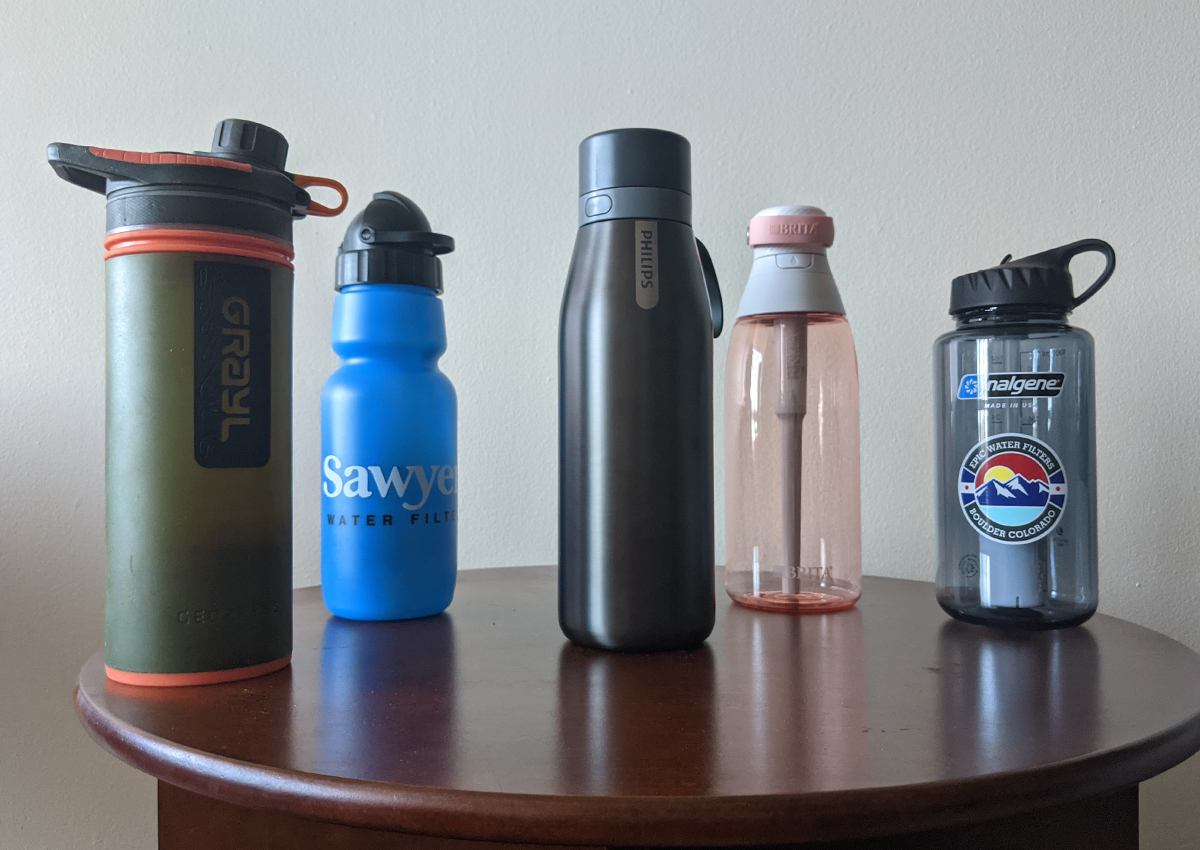
For improving off-taste in municipal-sourced bottled water (like store-bought “purified” brands), the $14 Brita Premium Plastic bottle targets chlorine and sediments without breaking the bank. Its NSF 42-certified carbon filter lasts 40 gallons—enough for 2 months of daily 16-ounce use—and fits cup holders perfectly. Warning: Never use this for travel abroad; it lacks microbiological certification, meaning zero protection against bacteria or viruses in questionable sources. Replace filters when flow slows noticeably, typically after 2 months of regular use.
Epic Universal Lid: Transform Any Bottle Instantly
Already own a Hydro Flask or Nalgene? The $59 Epic Universal Lid System converts it into a microplastic-removing machine. Its CoreXchange cartridge (NSF P473 certified) eliminates particles down to 0.1 microns—capturing nanoplastics standard filters miss—while removing 200+ contaminants like lead and PFAS. Each 75-gallon cartridge ($19) includes a recycling program: mail back used filters for free replacements. Pro move: Pair this with a wide-mouth bottle for easy cleaning—narrow mouths trap sediment that accelerates clogging.
Filter Based on Your Bottled Water’s Origin
Store-Bought Bottled Water Microplastic Fix
Even premium brands like Aquafina or Evian contain microplastics from packaging. Immediate action: Pour store-bought water through a LifeStraw bottle or Epic lid. The 0.2-micron barrier physically blocks particles invisible to the naked eye, while carbon filtration neutralizes plastic-derived odors. Visual cue: If water appears cloudy after filtration, your source bottle likely had high sediment—pre-filter through a coffee strainer first to extend filter life.
International Travel Bottled Water Purification
When refilling bottles from dubious hotel taps abroad, prioritize NSF P231-certified filters like the GRAYL GeoPress. Its press-action system (8-second cycle) destroys viruses and bacteria standard filters miss—a lifesaver in regions with contaminated water. Critical step: Fill the outer cup first, then press the inner vessel to activate filtration. Never drink directly from the unfiltered outer cup, as pathogens remain active until pressed through the cartridge.
Step-by-Step Bottled Water Filtration Protocol

Daily Filtration Routine (Under 60 Seconds)
- Pre-rinse your bottle with warm water—never submerge filters in soapy water
- Insert dry filter ensuring perfect alignment (cross-threading causes leaks)
- Fill bottle with your bottled water source, leaving 1-inch headspace
- Squeeze or press according to device specs (e.g., GRAYL requires firm downward pressure)
- Discard first 2 ounces to flush carbon dust from new filters
Time-saver: For LifeStraw bottles, store pre-rinsed filters in a ziplock bag to skip step 1 during commutes.
Filter Replacement Red Flags
Don’t wait for obvious failure—expired filters harbor bacteria. Track these signals:
– Brita/Philips: Water tastes metallic or flow drops below 1 ounce/second
– LifeStraw: Persistent clogging after cold-water rinsing (never use hot water)
– GRAYL: Requires excessive force (>15 lbs pressure) to press water through
Pro tip: Mark replacement dates using this formula: (Filter gallons ÷ 64) × 0.75. Example: A 40-gallon Brita filter used for 20 ounces daily lasts (40 ÷ 64) × 0.75 = 0.47 months (≈14 days).
Eliminate Microplastics in Bottled Water Like a Pro
Consumer-Grade Microplastic Traps
LifeStraw’s membrane filter (0.2 microns) captures most microplastics, but nanoplastics (<0.1 microns) require Epic’s P473-certified lid. Key insight: Microplastics often cling to carbon surfaces—shake filtered water vigorously before drinking to dislodge any residual particles. For confirmed nanoplastics, upgrade to a countertop distiller ($150), which boils water to leave plastics behind during condensation.
Avoid These Microplastic Mistakes
- Using carbon-only pitchers (like standard Brita jugs): They adsorb microplastics but don’t remove them—particles re-enter water when filters saturate
- Freezing filtered bottles: Ice crystals rupture filter membranes, creating microplastic pathways
- Ignoring flow rate: Filters working below 1 ounce/second lose 70% microplastic capture efficiency
Troubleshoot Bottled Water Filter Failures Immediately
Metallic Taste After Filtration
This usually means you’re filtering mineral-rich spring water (not filter failure). Fix: Pre-rinse filters with distilled water to neutralize mineral interactions. If taste persists beyond 3 bottles, replace the carbon filter—exhausted carbon leaches absorbed contaminants back into water.
Sudden Flow Stoppage During Use
Emergency steps:
1. Disassemble and rinse filter under COLD water for 60 seconds
2. Check for air locks—shake bottle upside-down while squeezing
3. Inspect gaskets for hairline cracks (common in GRAYL units after drops)
Never use boiling water to clear clogs—it melts membrane filters instantly.
Leaking Bottle Lid Fixes
Most leaks stem from three issues:
– Worn silicone gaskets: Replace every 6 months (cost: $3–$8)
– Cross-threaded caps: Align lid dots with bottle markings before tightening
– Cracked mouthpiece: Feel for rough edges—replace immediately if detected
Cost-Saving Filtration Strategy for Bottled Water
True Cost Per Gallon Revealed
| Filter Type | Upfront Cost | Annual Filter Cost | Real Cost per Gallon |
|---|---|---|---|
| Brita Plastic | $14 | $24 | $0.20 |
| LifeStraw SS | $39 | $40 | $0.04 |
| Epic Lid + Bottle | $109 | $76 | $0.15 |
Critical insight: LifeStraw’s 1,000-gallon membrane makes it 5x cheaper per gallon than Brita despite higher upfront cost. For microplastic removal, Epic costs $0.15/gallon but delivers hospital-grade purification.
Your Bottled Water Filter Cheat Sheet
Use LifeStraw When:
- Filtering microplastic-contaminated store brands
- Needing cold retention during commutes
- Prioritizing long-term cost savings
Choose Brita Plastic When:
- Removing chlorine from municipal-sourced bottled water
- Budget is under $20
- Kids need dishwasher-safe bottles for school
Grab GRAYL GeoPress When:
- Traveling to regions with unsafe tap water
- Filtering well water bottled at home
- Requiring virus-level protection (critical for immunocompromised users)
Final note: Always verify filter certifications match your threat—NSF P231 for pathogens, P473 for microplastics. Replace filters religiously; an expired unit becomes a bacterial breeding ground worse than unfiltered water. For daily peace of mind, pair a LifeStraw bottle with monthly microplastic test strips ($15) to confirm your filtration success. Start tonight: pour your existing bottled water through a certified filter and taste the difference pure hydration makes.