How to Filter Chemicals from Tap Water
This post contains affiliate links. As an Amazon Associate, we earn from qualifying purchases.
That glass of water from your kitchen faucet might contain invisible chemical passengers. Recent testing reveals nearly half of America’s tap water carries PFAS—synthetic “forever chemicals” with carbon-fluorine bonds so strong they never break down naturally. These microscopic contaminants, linked to thyroid disease, cancer, and immune disorders, slip through standard municipal treatment and accumulate in your body over time.
You don’t need expensive laboratory equipment to protect your family. This guide delivers actionable strategies to filter chemicals out of tap water, removing up to 94% of harmful PFAS compounds whether you’re on city water or a private well. By the end, you’ll know exactly which filtration systems work, how to install them properly, and why some popular options actually make your water more dangerous.
Test Your Water Before Installing Any Filter
Locate Your Consumer Confidence Report Immediately
Your water utility’s legally mandated annual report holds critical information about chemical contamination levels. Visit your provider’s website or search the EPA’s database using your ZIP code—renters should request this from landlords or building managers. This document reveals if your water exceeds the new 2024 federal limits for PFOS and PFOA (4 parts per trillion) or other regulated PFAS compounds.
Critical data points to verify:
– Current PFAS levels compared to federal standards
– Any mention of “fluorinated compounds” or “PFAS”
– Notes about planned treatment system upgrades
Conduct Private Well Testing If You’re Off Municipal Supply
Well water users face significantly higher risks, with Wisconsin data showing 71% of private wells contain detectable PFAS contamination. Testing isn’t optional—it’s your first line of defense against chemical exposure.
Reliable testing options:
– SimpleLab TapScore: $299 comprehensive PFAS panel
– Cyclopure: $79 basic PFAS screening
– Certified local labs: $300-600 for most accurate results
Pro tip: Schedule testing during spring or after heavy rainfall when contamination peaks due to runoff. Without this baseline data, you’re guessing whether your filtration system actually works.
Select the Right Filtration System for PFAS Removal
Install Reverse Osmosis for Maximum Chemical Removal
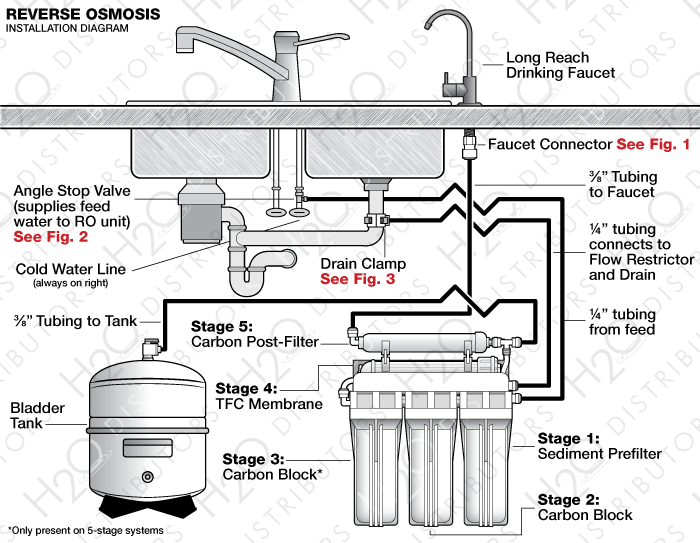
Reverse osmosis systems deliver the highest PFAS reduction—94% or better across all tested compounds, including stubborn GenX chemicals. These systems force water through a semi-permeable membrane with pores 0.0001 microns wide, capturing PFAS molecules while allowing pure water through.
When to choose reverse osmosis:
– Confirmed high PFAS levels in your water
– Families with young children or pregnant members
– Households seeking comprehensive chemical protection
Critical considerations: Professional installation costs $200-500 but ensures proper setup. The 3:1 waste water ratio means for every glass you drink, three glasses go down the drain—factor this into your water bill calculations.
Choose Certified Activated Carbon Filters for Budget Protection
Carbon filters average 73% PFAS removal, but performance swings wildly from 0-100% depending on carbon quality and maintenance. Not all carbon filters work—only those with NSF/ANSI 53 certification specifically listing PFAS reduction.
Proven effective pitcher filters:
– Brita Elite: NSF/ANSI 53 certified for PFAS
– ZeroWater: 5-stage system with 99%+ removal rates
– Clearly Filtered: Targeted PFAS reduction technology
Danger zone: Expired carbon filters can actually increase PFAS levels in your water. Replace them every 40 gallons or 2 months—whichever comes first—to maintain protection.
Consider Two-Stage Systems for Enhanced Performance
Emerging research shows two-stage filters combining carbon with ion exchange resins achieving 94%+ removal rates. These systems address PFAS compounds that single-stage carbon filters miss, though independent testing remains limited.
Implementation strategy: Start with reverse osmosis for primary protection, then add a secondary carbon stage if testing shows residual contamination. Monitor performance with follow-up water tests every 6 months.
Avoid Costly Installation Mistakes
Determine DIY vs Professional Installation Needs
Simple DIY installations (under 30 minutes):
– Faucet-mounted filters with quick-connect fittings
– Countertop units requiring no plumbing modifications
– Water filter pitchers (zero installation needed)
Professional installation strongly recommended:
– Under-sink reverse osmosis systems
– Any system requiring permanent plumbing connections
– Systems with drain line modifications
Cost reality check: Professional installation adds $200-500 but prevents leaks that could cause thousands in water damage. Factor this into your initial budget rather than risking improper setup.
Match Filter Capacity to Your Household Usage
Calculate your actual daily drinking water needs before purchasing:
– Single adult: 0.5-1 gallon for drinking/cooking
– Family of four: 2-3 gallons
– Heavy tea/coffee drinkers: Add 0.5 gallons per person
Warning: Oversized systems waste money while undersized units fail to maintain performance. Choose systems rated for 20% above your calculated needs to ensure consistent chemical removal throughout the filter’s life.
Maintain Your System to Prevent Chemical Breakthrough

Follow Strict Filter Replacement Schedules
Reverse osmosis maintenance:
– Pre-filters: Every 6-12 months
– RO membrane: Every 2-3 years
– Post-filters: Annually
Carbon filter replacement:
– Pitcher filters: Every 40 gallons or 2 months
– Faucet filters: Every 100 gallons or 3 months
– Countertop units: Every 6-12 months
Critical warning: Reduced water flow or metallic taste returning signals expired filters. Don’t wait for indicator lights—track usage manually for reliable protection.
Dispose of Used Filters Safely
Used filters contain concentrated PFAS with no current safe disposal method. Standard trash remains the only option, though researchers develop destruction technologies.
Reduce environmental impact:
– Let filters dry completely before disposal
– Seal in plastic bags to minimize exposure
– Support manufacturer take-back programs when available
Troubleshoot Common Filtration Failures
Diagnose Sudden Performance Drops
When filters stop working:
– Check installation date against replacement schedule
– Inspect for leaks bypassing the filtration media
– Test water pressure—low pressure reduces effectiveness
Cloudy water after filtration:
– Normal during first 24-48 hours of new RO system operation
– Persistent cloudiness indicates membrane failure
– Never ignore this sign—test water immediately
Handle High-Contamination Scenarios
For PFAS levels exceeding 70 ppt:
– Combine reverse osmosis with activated carbon
– Double your filter replacement frequency
– Install sediment pre-filter to extend system life
Well water specific protocols:
– Test annually for PFAS and other contaminants
– Add UV sterilization for bacterial issues
– Consider whole-house pre-filtration for sediment
Future-Proof Your Water Protection Strategy
Track Regulatory Changes That Affect You
The EPA’s 2024 PFAS regulations face ongoing legal challenges. Stay informed through:
– EPA.gov PFAS updates page
– Local water utility notifications
– State health department email alerts
Critical update: In May 2025, the EPA announced plans to rescind limits on four PFAS compounds while delaying enforcement on PFOA and PFOS—monitor how this affects your local water quality.
Advocate for Systemic Solutions
While home filtration protects your family, source control solves the problem. Support:
– Local water quality initiatives
– Manufacturer accountability efforts
– Stricter PFAS discharge regulations
Community action: Organize neighborhood water testing to identify contamination patterns and pressure authorities for system-wide treatment.
Your tap water doesn’t have to be a chemistry experiment. By testing first, choosing certified filtration systems, and maintaining them properly, you can remove up to 94% of harmful PFAS chemicals. Start with water testing, then implement the simplest effective solution for your contamination levels. The peace of mind that comes with clean, safe drinking water is worth every penny—your health depends on it. Remember: when it comes to filtering chemicals out of tap water, knowledge and proper maintenance are your most powerful tools.