How to Use Zero Water Filter Pitcher: Quick Guide
This post contains affiliate links. As an Amazon Associate, we earn from qualifying purchases.
Your ZeroWater filter pitcher promises pure, great-tasting water with zero total dissolved solids, but improper setup or usage can compromise its performance. If you’ve ever wondered why your filtered water tastes strange or filters too slowly, you’re not alone—most users miss critical steps during initial setup that affect long-term performance. This guide delivers the exact procedures needed to maximize your ZeroWater investment, from unboxing to daily maintenance, ensuring you consistently get water measured at 000-006 TDS.
ZeroWater Pitcher Unboxing and Component Verification
Remove all components from packaging and immediately verify you have the complete system: pitcher body with spout, upper reservoir, lid (either flip-top or removable style), one five-stage ion exchange filter cartridge, and the digital TDS meter. Missing any piece prevents proper operation, so check carefully before proceeding.
Critical verification checklist:
– Pitcher body with lower chamber and pouring spout
– Upper reservoir with filter housing compartment
– Secure-fitting lid appropriate for your model
– Sealed five-stage filter cartridge in original packaging
– Digital TDS meter with protective cap and battery
Rinse the pitcher body, reservoir, and lid thoroughly with warm water—never use soap on these components initially as residues could affect early filtration. This simple cleaning removes manufacturing dust and prepares your system for optimal performance right from the start.
Proper ZeroWater Filter Installation Steps
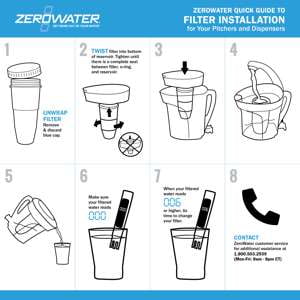
Initial Filter Preparation
Remove your filter from its sealed plastic packaging and immediately rinse under cold tap water for 10-15 seconds. This crucial step washes away loose carbon dust that would otherwise create cloudy water and affect taste during your first few uses. Skipping this preparation is the #1 cause of disappointment with new ZeroWater systems.
Secure Filter Placement Process
- Insert the filter into the reservoir base by carefully aligning the threading grooves
- Twist clockwise with firm, even pressure until the filter sits flush against the base
- Verify no gaps exist between filter and reservoir—light should not pass through
- Place the reservoir into the pitcher body until it rests securely on the internal ledge
- Attach the lid by aligning it with the pitcher’s rim and pressing down until it clicks
Warning: Over-tightening cracks the plastic filter housing, while under-tightening causes leaks between filter and reservoir. Stop twisting when you feel firm resistance—never force it.
First-Time TDS Meter Setup and Calibration
Your digital TDS meter arrives with a protective cap covering the probes and requires one battery (included in packaging). Remove the cap, insert the battery with correct polarity, and press the power button to activate the display. Before testing filtered water, establish your baseline by measuring your tap water’s TDS level.
Calibration verification method:
– Insert probes into unfiltered tap water up to the marked line
– Hold meter steady until reading stabilizes (typically 10-15 seconds)
– Record this baseline number—municipal water typically ranges 50-400 TDS
– Verify meter accuracy by testing distilled water (should read 000)
The meter arrives pre-calibrated from the factory, but annual battery replacement and periodic cleaning of probe ends with a soft, dry cloth maintain accuracy. Dim display or inconsistent readings indicate battery replacement time.
Daily Filling Process for Optimal Filtration
Open your flip-top lid or remove the entire lid depending on your model design. Fill the reservoir with cold tap water up to the maximum fill line—never exceed this mark or overflow will occur. Water begins filtering immediately through all five stages as soon as contact with the filter occurs.
Filtration time expectations:
– Brand new filter: 1-2 minutes per full reservoir
– Mid-life filter: 2-4 minutes (normal performance)
– End-of-life filter: 8-10+ minutes (time to replace)
Pour filtered water directly from the pitcher spout once filtration completes. The reservoir automatically stops filling when the lower chamber reaches capacity, but never leave water sitting in the pitcher for more than 24 hours to prevent bacterial growth and maintain optimal taste.
Interpreting ZeroWater TDS Readings Correctly
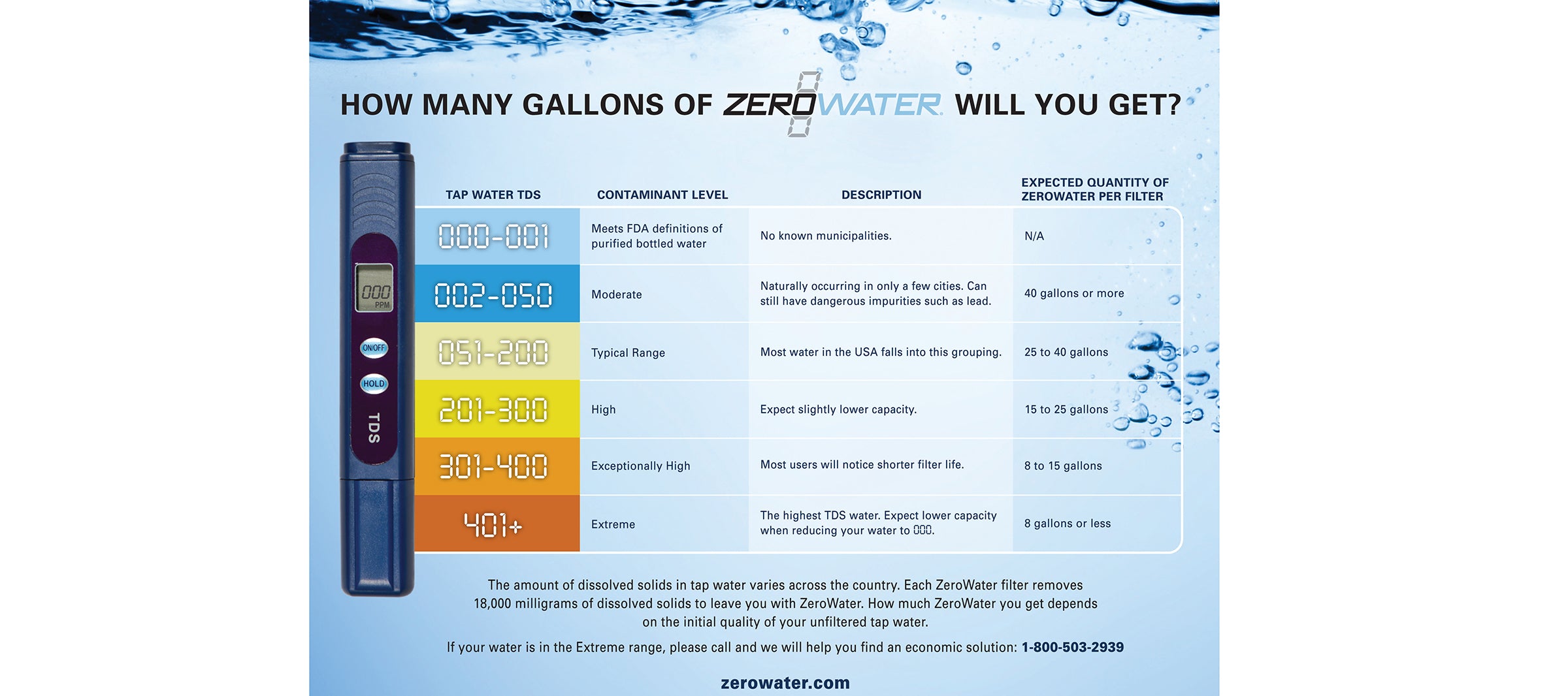
Test your filtered water immediately after each full reservoir completes filtration. Insert the TDS meter probes into the filtered water up to the marked line and wait for the reading to stabilize. ZeroWater’s five-stage system should consistently deliver readings between 000-006 TDS—anything higher indicates compromised filtration.
Filter replacement triggers:
– Consistent readings above 006 TDS
– Acidic or lemon-like taste developing
– Visible black carbon particles in filtered water
– Filtration time exceeding 10 minutes per reservoir
Run two full reservoirs through a new filter before consuming the water—this flushes manufacturing residues and ensures optimal performance from day one. Record your initial TDS readings with the new filter to establish your personal performance baseline.
Essential Maintenance Routine for ZeroWater Pitchers
Empty and refill your pitcher daily to ensure the freshest tasting water. Wipe exterior surfaces with a damp cloth as needed, but avoid submerging the TDS meter in water during cleaning. Both reservoir and pitcher body can be washed with mild dish soap and warm water—just ensure thorough rinsing before reassembly.
Deep Cleaning Protocol Every 2-4 Weeks
- Completely disassemble all components
- Wash pitcher, reservoir, and lid with warm soapy water
- Use a bottle brush to reach corners and crevices
- For stubborn mineral buildup, soak in equal parts white vinegar and water for 15 minutes
- Rinse all parts thoroughly with clean water
- Air dry completely before reassembly
Pro tip: Never store your pitcher with water inside for extended periods—this creates ideal conditions for bacterial growth and affects taste. Always empty and dry components if leaving unused for more than 24 hours.
When to Replace Your ZeroWater Filter Cartridge
Monitor both TDS readings and physical indicators to determine exact replacement timing. Each filter processes approximately 25-40 gallons depending on your source water quality—higher TDS levels reduce filter lifespan proportionally. Track your household’s water consumption to anticipate replacement needs.
Complete Filter Replacement Procedure
- Remove old filter by twisting counterclockwise from reservoir base
- Discard used filter according to local recycling regulations
- Rinse new filter under cold water for 10-15 seconds
- Install new filter following initial installation steps
- Run two full reservoirs through the new filter before consumption
- Reset your TDS baseline by recording new filter performance
Store spare filters in a cool, dry location—not in the refrigerator—as moisture affects performance. Unopened filters maintain effectiveness for up to two years from manufacture date when stored properly.
Troubleshooting Slow Filtration Issues Immediately
If your filtration time suddenly increases beyond normal expectations, first check filter seating—remove and reinstall the filter to ensure proper alignment. Verify your water temperature stays below 100°F as hotter water damages the ion exchange resin. Examine the reservoir for debris blocking water flow channels.
Quick diagnostic steps:
– Remove and reinstall filter to check seating
– Test with room temperature water (not cold from refrigerator)
– Inspect reservoir for visible obstructions
– Check TDS readings to determine if filter has expired
When filtration takes more than 10 minutes per reservoir despite proper installation, replacement is necessary regardless of TDS readings. Continuing to use an exhausted filter risks releasing captured contaminants back into your water.
Maximizing ZeroWater Filter Lifespan Strategically
Store your pitcher in the refrigerator between uses to slow bacterial growth, but never keep filtered water longer than 3-5 days for optimal taste. For households with well water or TDS levels above 400, consider pre-filtration with a basic carbon filter to extend ZeroWater cartridge life.
Pro tips for longevity:
– Always use cold tap water (not refrigerator-chilled water)
– Never exceed maximum fill line in reservoir
– Avoid using with hot water (>100°F) which damages resin
– Don’t use for carbonated beverages or flavored liquids
– Track filter usage with date markers on pitcher
For heavy users, maintain a replacement schedule based on your household’s consumption—typically every 2-4 months for a family of four using the pitcher exclusively for drinking water.
Critical Safety Limits for ZeroWater Pitcher Operation
ZeroWater pitchers have specific operational boundaries you must respect for safety and performance. Never use water exceeding 100°F (38°C) as hot water damages the ion exchange resin and can release captured contaminants back into your filtered water. The system is designed exclusively for tap water filtration—never attempt to filter saltwater, carbonated beverages, or chemically treated water.
Essential safety parameters:
– Maximum water temperature: 100°F (38°C)
– Filter capacity: 25-40 gallons (varies by source water)
– Replacement indicator: TDS >006 or slow filtration
– Storage requirements: Cool, dry location for spare filters
Discard filters showing visible discoloration, slime buildup, or emitting unusual odors immediately—these indicate bacterial growth or filter failure. Your health depends on respecting these operational limits while using your ZeroWater system.
Your ZeroWater pitcher transforms ordinary tap water into exceptional hydration when used correctly. By following these precise setup instructions, monitoring TDS readings religiously, and replacing filters at the first sign of performance decline, you’ll consistently enjoy pure, refreshing water measured at 000 TDS. Remember to clean components regularly, respect temperature limits, and never compromise on filter replacement timing—your health and taste experience depend on it. For optimal results, pair your disciplined usage with proper storage of spare filters and regular TDS meter maintenance to ensure years of reliable performance from your ZeroWater investment.