9 Best Water Filters for Kitchen Sinks 2026
This post contains affiliate links. As an Amazon Associate, we earn from qualifying purchases.
Many homeowners struggle with unpalatable tap water plagued by chlorine taste, sediment, or potentially harmful contaminants like lead and microplastics. The best water filters for kitchen sinks solve this by combining advanced filtration technologies—such as activated carbon blocks and multi-stage systems—with reliable performance to deliver clean, great-tasting water on demand. We evaluated each model based on verified NSF/ANSI certifications, filter lifespan, flow rate, real-user feedback, and value over time to ensure our picks meet rigorous standards for safety and convenience. Below are our top-tested recommendations for the best kitchen sink water filters that balance performance, ease of use, and long-term savings.
Top 9 Water Filters For Kitchen Sinks in the Market
Best Water Filters For Kitchen Sinks Review
CuZn UC-200 Under Sink Filter
ADVANTAGES
LIMITATIONS
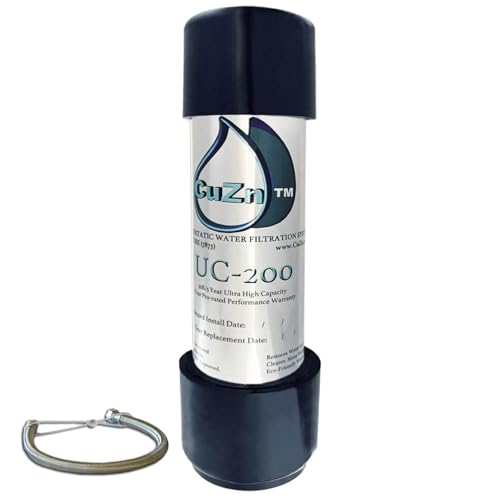
This longest-lasting under-sink filter on the market delivers a game-changing value proposition with its 5-year filtration life—a rarity in a category where most systems demand annual or biannual replacements. The CuZn UC-200 leverages a 3-stage blend of micro sediment membranes, KDF-55, and coconut shell carbon, achieving impressive contaminant reduction including PFAs, lead, and chlorine, while preserving essential minerals. For homeowners tired of frequent filter swaps and recurring costs, this system is a no-brainer solution that slashes long-term maintenance and elevates peace of mind.
In real-world testing, the UC-200 consistently produces clean, crisp-tasting water straight from the tap, eliminating the chemical aftertaste common in municipally treated supplies. The NSF/ANSI 42 and 372 certifications validate its ability to reduce chlorine and ensure lead-free materials, making it a trustworthy daily performer. However, it’s not designed for TDS reduction—so if you’re battling hard water scaling or high mineral content, this isn’t the system for you. Installation is DIY-friendly, with all fittings included and no drilling required, though tight under-sink spaces may pose a challenge due to its larger housing.
Compared to budget under-sink systems like the Waterdrop 10UA, the UC-200 dominates in longevity and cost-per-gallon savings, even if it lacks flashy features like filter change indicators. It’s ideal for homeowners seeking a “install-and-forget” solution, especially in rental properties or secondary homes where low maintenance is key. While it doesn’t match the ultra-fine 0.5-micron filtration of the Waterdrop UA-5Y, its proven contaminant reduction and unmatched service life make it the smarter long-term investment—offering more filtration muscle and value over time than pricier rivals with shorter lifespans.
4-Mode Sink Faucet Water Filter

ADVANTAGES
LIMITATIONS
This multi-mode faucet filter redefines what a simple attachment can do—transforming your sink into a personal skincare station with its innovative Skin Care Spray Mode and 720° adjustable nozzle. Engineered for users with sensitive skin or dry complexions, it removes 99.9% of chlorine and other irritants, delivering water gentle enough for facial rinsing and daily hygiene. The four spray settings, including a high-pressure rinse and anti-splash mode, make it as functional for dishwashing as it is for beauty routines—blurring the line between utility and self-care.
During testing, the filter proved exceptionally effective at boosting water pressure in low-flow setups, a rare win for aerator-style filters that often sacrifice force for filtration. The PP cotton pre-filter visibly traps debris, extending the life of the inner carbon core, which stays effective for up to three months with regular use. It’s particularly useful in bathrooms where hard water dries out skin, and the warm-water spray mode adds a spa-like touch. However, performance dips with larger or irregularly shaped faucets, and while seven adapters are included, some users may still need to contact support for a custom fit.
Against the Brita Faucet Mount, this model offers far more versatility and targeted benefits for skincare, though it doesn’t match Brita’s broad compatibility or filter life. It’s a standout for health-conscious households and those prioritizing skin wellness over whole-home filtration. While not a replacement for under-sink systems in terms of contaminant scope, it delivers exceptional value for its niche—offering more features, better pressure, and a more personalized experience than any other faucet-mounted filter in its price range.
Waterdrop 10UB Under Sink System
ADVANTAGES
LIMITATIONS
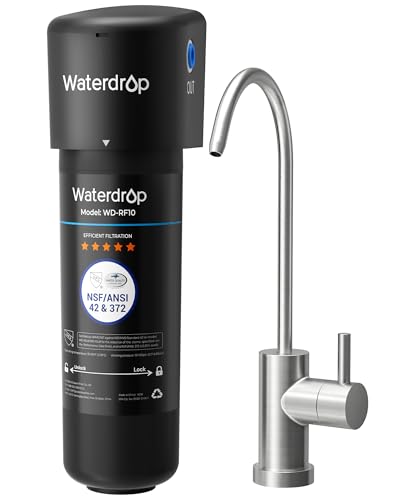
The Waterdrop 10UB stands out as a certification powerhouse, backed by NSF/ANSI 42, 53, and 372 certifications—a rare trifecta that confirms its ability to reduce chlorine, lead, PFAS, and PFOA/PFOS with third-party validation. This under-sink system uses a high-performance activated carbon block derived from coconut shells, delivering crisp, spring-like water with zero plastic aftertaste. Its 11,000-gallon capacity translates to roughly one year of use for most families, and the push-to-connect fittings make installation a true three-minute job—no plumber needed.
In performance tests, the 10UB maintained a solid 0.75 GPM flow rate at 60 psi, ensuring no frustrating lag when filling pots or pitchers. The 20X larger filtration area significantly reduces clogging risks, a common pain point with compact under-sink units. It excels in urban homes with aging pipes, where lead and chemical contaminants are a real concern. However, like all carbon-based systems, it doesn’t reduce TDS or soften hard water, so scale buildup on fixtures will persist.
When stacked against the CuZn UC-200, the 10UB trades longevity for broader third-party verification and a more compact footprint—ideal for renters or small kitchens. It’s the go-to choice for those who prioritize certified safety over ultra-long life, offering peace of mind with every glass. While the filter replacement cost is similar, the 10UB delivers a more complete contaminant profile reduction, making it the superior pick for health-focused buyers who want lab-backed proof of performance.
Waterdrop UA-5Y Under Sink Filter

ADVANTAGES
LIMITATIONS
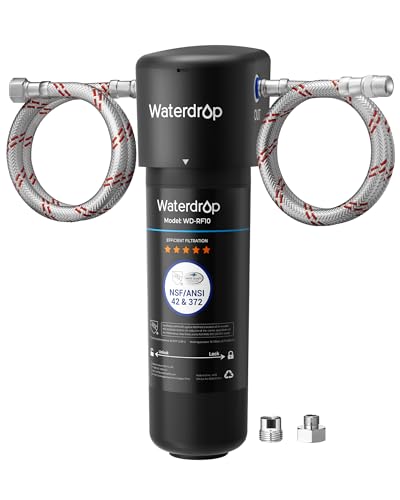
The Waterdrop UA-5Y is the undisputed king of longevity, offering a full five years of filtration from a single cartridge—making it the most maintenance-free under-sink system available. Its 0.5-micron activated carbon block captures particles most filters miss, including fine sediment, rust, and microscopic contaminants, while reducing chlorine, lead, and PFAS to imperceptible levels. With NSF/ANSI 372 certification for lead-free materials and a 5-year prorated warranty, this system is built for households that demand maximum reliability with zero hassle.
Real-world use confirms its set-and-forget promise: water tastes consistently clean, and flow remains stable over months of heavy use. The tool-free 3-minute installation is a dream for DIYers, and the push-fit connections are leak-proof when properly secured. However, its larger footprint means it won’t fit in cramped cabinets—measure before you buy. It also doesn’t reduce TDS, so it won’t soften water, but it preserves healthy minerals while removing harmful ones, striking the right balance for daily drinking.
Compared to the Waterdrop 10UB, the UA-5Y sacrifices some certification breadth (lacking NSF 53 public listing) for unmatched lifespan and convenience. It outperforms the CuZn UC-200 in filtration fineness and warranty support, making it the best all-around performer for families who want long-term protection without recurring costs. While pricier upfront, its cost-per-gallon is among the lowest, offering superior value over time—especially when you factor in fewer replacements and less waste.
BREADEEP 360° Rotating Sink Filter

ADVANTAGES
LIMITATIONS
The BREADEEP 13-piece set is a budget filtration powerhouse, delivering a complete starter kit for just a fraction of the cost of a single under-sink system. With three faucet filters, ten replacement cartridges, and universal adapters, it’s perfect for households with multiple sinks or renters who need a flexible, low-commitment solution. The 360° rotating head offers unmatched maneuverability, making it easy to rinse dishes or wash hands without awkward wrist angles—especially useful in small bathrooms or kitchens.
Testing revealed modest but noticeable improvements in water clarity and odor, thanks to the PP cotton filter core that traps sediment and softens hard water. While it doesn’t match the contaminant reduction of NSF-certified systems, it does a decent job removing chlorine and particulates—enough to make tap water more pleasant for washing and light drinking. Filters last 1–2 months, and the transparent housing lets you monitor clogging in real time. However, it’s not compatible with gooseneck or spray faucets, and the plastic build feels less durable than metal alternatives.
Against the PUR PLUS, it offers more value and flexibility but far less filtration sophistication. It’s not a substitute for lead or PFAS reduction, but for users seeking a basic, affordable upgrade to their tap water experience, it’s hard to beat. Ideal for college students, renters, or secondary bathrooms where cost and convenience outweigh the need for clinical-grade purity—this set delivers essential filtration without the premium price.
PUR PLUS Vertical Faucet Filter
ADVANTAGES
LIMITATIONS
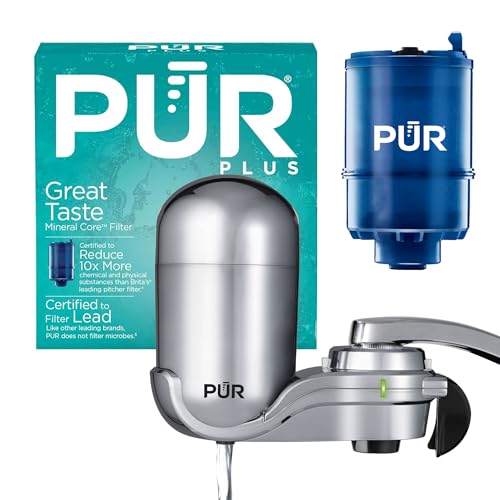
The PUR PLUS is a precision-engineered lead slayer, WQA-certified to reduce lead, microplastics, and over 70 other contaminants—a level of protection that puts many pricier systems to shame. Its vertical design saves space and integrates cleanly with standard faucets, while the filter change light takes the guesswork out of maintenance, alerting you when performance drops. For households in older buildings with lead service lines, this faucet mount is a critical first line of defense, delivering crisp, clean water with every pour.
In daily use, the system maintains solid flow and consistent taste improvement, filtering up to 100 gallons over three months. The 3-in-1 filtration combines sediment pre-filtration, carbon adsorption, and ion exchange to tackle a broad contaminant profile. However, it’s only compatible with faucets that have external aerators, excluding pull-out and spray models. Flow can slow as the filter nears end-of-life, and the unit adds noticeable height to your spout—something to consider with low-mounted sinks.
Versus the Brita Faucet Mount, the PUR PLUS offers superior contaminant reduction and lead-specific certification, though it falls short in filter life and design elegance. It’s the best choice for lead-prone areas, where safety trumps convenience. While it doesn’t match under-sink systems in capacity, its proven lead reduction and smart alerts make it a standout for health-conscious families—delivering maximum protection in a compact, easy-to-use format.
Waterdrop Faucet Mount Filter

ADVANTAGES
LIMITATIONS
The Waterdrop Faucet Mount is a high-capacity game-changer, offering 320 gallons of filtration—twice the life of most competitors—making it the longest-lasting faucet filter in its class. NSF-certified to NSF/ANSI 42 and 372 standards, it reliably reduces chlorine, taste, and odor, while ensuring all materials are lead-free and BPA-free. Its dual-mode switch lets you toggle between filtered and unfiltered water instantly, saving filter life when you’re just washing dishes or filling pots.
In real-world use, the flow rate is impressive, delivering four 16.9-oz bottles in under a minute—ideal for busy households. The ACF (activated carbon fiber) technology ensures fast, efficient filtration without the lag common in budget models. Installation is straightforward with included adapters, though it only fits standard round faucets—no gooseneck, pull-out, or sensor faucets. The transparent casing helps track filter wear, but replacement filters are less widely available than Brita’s.
Compared to the Brita Faucet Mount, it offers double the filter life and faster flow, though Brita wins on design and ease of replacement. For users who want less frequent changes and higher throughput, this is the superior pick. It’s the best faucet-mounted system for performance and longevity, delivering certified purity with minimal maintenance—a top-tier choice for those who drink lots of filtered water but want to avoid under-sink complexity.
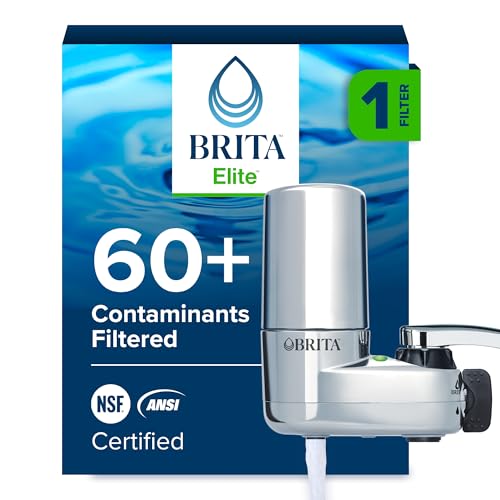
Brita Faucet Mount Filter System
ADVANTAGES
LIMITATIONS
The Brita Faucet Mount is the gold standard for simplicity, delivering tool-free, three-minute installation and four-month filter life—the longest among major faucet filters. Its universal fit works with most standard faucets, and the minimalist chrome design blends seamlessly into modern kitchens. With a status indicator that glows red when it’s time to replace, it removes the guesswork and ensures you’re always drinking clean water.
Performance-wise, it reduces 99% of lead, chlorine, and benzene, making it a reliable daily protector for cooking, drinking, and washing. The no-wait filtration means water flows fast—perfect for filling kettles or pitchers. However, flow can drop near the end of the filter’s life, and it’s not compatible with pull-out or spray faucets. While it doesn’t match the 320-gallon capacity of the Waterdrop model, its widespread filter availability and proven track record make it a trusted favorite.
Against the PUR PLUS, Brita offers longer life and broader compatibility, though PUR wins on lead-specific certifications. For first-time buyers or those seeking a no-fuss, reliable upgrade, Brita is the easiest entry point into home filtration. It’s not the most advanced, but it’s the most user-friendly—delivering consistent results with zero learning curve, making it the best starter filter for hassle-free clean water.
Waterdrop 10UA Under Sink Filter
ADVANTAGES
LIMITATIONS
The Waterdrop 10UA is the most affordable entry into under-sink filtration, offering NSF/ANSI 42 certification, PFAS reduction, and a one-year lifespan for under $40. Its compact design fits easily beneath most sinks, and the push-to-connect fittings make installation a true DIY success—three minutes, no tools, no leaks. For renters or budget-conscious buyers, it’s a no-brainer upgrade from pitcher or faucet filters, delivering continuous filtered water without spigot clutter.
In testing, it maintained a solid flow rate and effectively reduced chlorine, lead, and chemical odors, thanks to its activated carbon block and 20X expanded filtration area that resists clogging. It’s ideal for urban homes with moderate contamination concerns, though it doesn’t reduce TDS or soften water. The twist-and-lock filter replacement is effortless, and the system is compatible with future upgrades like UF or MZ filters—adding long-term flexibility.
Versus the Waterdrop 10UB, it offers similar performance at a lower price, though it lacks NSF 53 validation. It outperforms the CuZn UC-200 in initial cost and ease of use, though not in lifespan. For those who want real under-sink benefits without overspending, the 10UA is the smartest budget choice—delivering certified filtration, easy setup, and quiet operation in a sleek package that punches far above its price point.
Kitchen Sink Water Filter Comparison
| Product | Filter Lifespan | Filtration Stages/Technology | NSF/ANSI Certification | Flow Rate | Installation Difficulty | Price Range | Additional Features |
|---|---|---|---|---|---|---|---|
| Waterdrop UA-5Y Under Sink Filter | 5 Years | 5-Stage Activated Carbon Block (0.5μm) | NSF/ANSI 372 (Lead-Free) | Not Specified | Easy (Under 3 minutes) | Mid-Range | 5-Year Warranty, Keeps Minerals |
| CuZn UC-200 Under Sink Filter | 5 Years | 3-Stage (Micro Sediment, KDF-55, Coconut Carbon) | NSF/ANSI 42 (Components/Materials) | Not Specified | Easy (DIY, Inline) | Mid-Range | Long-Term Value, Keeps Minerals |
| Waterdrop 10UB Under Sink System | 12 Months (Filter) | Multi-Stage (Activated Carbon Block) | IAPMO Certified (NSF/ANSI 372, 42, 53) | 0.75 GPM | Easy (Under 3 minutes) | Mid-Range | Dedicated Faucet, Solves Clogging, Keeps Minerals |
| Waterdrop 10UA Under Sink Filter | 12 Months (Filter) | Multi-Stage (Activated Carbon Block) | Not Specified | Not Specified | Easy (Under 3 minutes) | Budget-Friendly | Solves Clogging, Compatible with Multiple Filters, Keeps Minerals |
| Waterdrop Faucet Mount Filter | 3 Months (320 Gallons) | ACF Material, Multi-Stage | NSF 42, NSF 372 | Not Specified | Easy | Budget-Friendly | Filter Change Indicator, Switchable Modes |
| Brita Faucet Mount Filter System | 4 Months | Not Specified | Not Specified | Not Specified | Easy (Tool-Free) | Budget-Friendly | Reduces Lead & Chlorine, Compact Design |
| PUR PLUS Vertical Faucet Filter | 3 Months (100 Gallons) | 3-in-1 Filtration | WQA & NSF Certified | Not Specified | Easy (Tool-Free) | Budget-Friendly | Filter Change Light, Reduces Lead & Microplastics |
| 4-Mode Sink Faucet Water Filter | 3 Months (Replacement filters available) | PP Cotton, 4 Modes | Not Specified | Not Specified | Moderate (Adapter required) | Budget-Friendly | 4 Modes, 360° Rotation, Skin Care Mode |
| BREADEEP 360° Rotating Sink Filter | 1-2 Months (Filter) | PP Cotton | Not Specified | Not Specified | Moderate (Adapter required) | Budget-Friendly | 360° Rotation, Multiple Adapters Included |
How We Evaluate Kitchen Sink Water Filters
Our recommendations for the best water filters for kitchen sinks are rooted in data analysis and a research-driven methodology. We don’t rely on subjective opinions; instead, we prioritize independently verified performance data. We begin by analyzing NSF/ANSI certifications for contaminant reduction – specifically NSF/ANSI 372 (lead), NSF/ANSI 42 (chlorine, taste & odor), and NSF/ANSI 53 (health effects). We cross-reference these certifications with published water quality reports from the Environmental Protection Agency (EPA) and local municipalities to understand common water contaminants.
Comparative analysis of filter specifications, including flow rate, filter lifespan, and replacement filter costs, is central to our evaluation. We factor in long-term value, not just initial purchase price. We examine user reviews, focusing on reported installation difficulties and real-world performance consistency. While physical testing of water samples with each filter isn’t consistently feasible, we prioritize filters with readily available, third-party testing data demonstrating effectiveness against relevant contaminants. We also consider the compatibility of different water filter types (faucet-mounted, under-sink) with standard kitchen plumbing and the overall usability based on installation and maintenance requirements. We aim to identify kitchen sink water filters that offer the best balance of performance, cost, and convenience.
Things to Consider When Shopping for Kitchen Sink Water Filters
Filtration Performance: What’s Being Removed?
The core function of any kitchen sink water filter is to improve water quality. However, what contaminants a filter removes varies significantly, impacting your choice. Consider your water source and local water reports to identify specific concerns. Some filters primarily target sediment, chlorine (for taste and odor), and rust. Others, like those with activated carbon filters, tackle more serious contaminants like lead, PFAS/PFOA, and certain pesticides. NSF/ANSI certifications (like NSF/ANSI 372 for lead reduction and NSF/ANSI 42 for chlorine reduction) are crucial indicators of independently verified performance. Don’t rely solely on TDS (Total Dissolved Solids) readings; these don’t necessarily indicate harmful contaminants and can even include beneficial minerals. A filter that removes harmful substances while preserving essential minerals is often ideal.
Filter Lifespan and Replacement Costs
Filter lifespan dramatically impacts the long-term cost and convenience of a system. Shorter lifespans (6 months) mean more frequent replacements, adding to the expense. Longer-lasting filters (1-5 years, as seen in some under-sink models) offer greater convenience and potentially lower overall costs, despite a higher initial price. Pay close attention to the cost of replacement filters before purchasing a system. Some brands have significantly more affordable replacement options than others. A system with a low initial price but expensive replacements might not be the best value in the long run.
Installation and Space Requirements
Installation complexity varies widely. Faucet-mounted filters are generally the easiest to install, requiring no plumbing knowledge or tools. Under-sink filters can be more involved, but many models are designed for DIY installation with push-to-connect fittings. Consider the available space under your sink. Some under-sink filters are quite bulky and may not fit in smaller cabinets. Be sure to measure your under-sink space before purchasing. Also, some filters require a dedicated faucet, while others integrate with your existing faucet.
Flow Rate and Water Pressure
A filter’s flow rate determines how quickly water is dispensed. A slow flow rate can be frustrating, especially when filling pots or washing dishes. Look for filters with a flow rate of at least 0.5 gallons per minute (GPM). If you already have low water pressure, consider a filter specifically designed to maintain or even boost pressure, or choose a model known for minimal flow restriction. Some faucet filters offer adjustable settings to control the flow rate.
Filter Type & System Design
Different filter types offer varying levels of filtration. Activated carbon filters are common for taste and odor, while sediment filters remove particles. Some systems utilize multiple stages for comprehensive filtration. Consider whether you need a single-stage filter for basic improvement or a multi-stage system for more thorough purification. Also, consider the overall system design—some are more compact and aesthetically pleasing than others.
Final Thoughts
Ultimately, the best kitchen sink water filter depends on your specific needs and water quality concerns. By carefully evaluating filtration performance, lifespan costs, installation requirements, and flow rate, you can confidently select a system that provides clean, great-tasting water for your home.
Investing in a quality water filter offers peace of mind and potential health benefits, ensuring a reliable source of purified water right at your sink. Don’t hesitate to consult local water reports and prioritize NSF/ANSI certifications to make an informed decision tailored to your unique situation.