Can Filtered Water Bottles Remove Viruses and Pathogens?
This post contains affiliate links. As an Amazon Associate, we earn from qualifying purchases.
You’re packing for a Costa Rican jungle trek or a backpacking trip through Southeast Asia. You grab your trusty filtered water bottle, confident it will protect you from contaminated streams and sketchy tap water. But here’s what most travelers don’t realize: standard filtered water bottles cannot remove viruses, leaving you dangerously exposed to hepatitis A, norovirus, and other life-altering infections. That “filtered” label on your bottle likely only stops bacteria and parasites—viruses slip through like dust through window screen. This critical gap in protection causes thousands of preventable illnesses annually among travelers who assume their bottle offers complete safety. Discover exactly which bottles actually eliminate all pathogens and why understanding this difference could save your trip—or your health.
Filter vs Purifier: The Life-or-Death Distinction
The water treatment industry’s failure to clearly differentiate filters from purifiers puts travelers at serious risk. Standard water filters and true water purifiers operate on fundamentally different principles, making the choice between them a matter of potential hospitalization versus safe hydration.
Why Standard Filters Fail Against Viruses
Conventional filtered water bottles rely solely on mechanical filtration through tiny pores—a method completely ineffective against viruses due to physics. Here’s what your typical “filtered” bottle actually handles:
What Standard Filters Capture:
– Bacteria (0.1-5 microns): E. coli, Salmonella, Cholera
– Parasites (1-100+ microns): Giardia, Cryptosporidium
– Sediment and debris
– Chlorine taste and odor (through basic carbon filters)
What Slips Through Unchecked:
– All waterborne viruses (0.02-0.3 microns)
– Chemical contaminants like pesticides
– Dissolved heavy metals including lead
This limitation isn’t a design flaw—it’s a physical impossibility. Viruses are simply too small for the pore sizes in standard filters.
How True Purifiers Eliminate Every Threat
Water purifier bottles deploy multi-stage technology specifically engineered for virus removal. The Water-to-Go 3-in-1 system demonstrates the essential components:
- Mechanical pre-filtration – Captures sediment and large particles
- Chemical adsorption – Activated carbon and alumina remove pesticides, chlorine, and heavy metals
- Electropositive nanofiltration – Positively charged fibers attract and trap viruses
Unlike passive filters, this active capture technology works because viruses carry a natural negative charge—making physical pore size irrelevant.
Virus Size vs Filter Pores: The Critical Math

Understanding why standard filters fail requires grasping the microscopic scale difference. Viruses are 10-100 times smaller than bacteria, rendering conventional filtration useless against them.
Size Comparison That Explains Your Risk
- Hepatitis A virus: 0.027 microns
- Norovirus: 0.03 microns
- Rotavirus: 0.08 microns
- Typical filter pore size: 0.3-1.0 microns
Even the “tightest” 0.3-micron filter has pores 10 times larger than hepatitis A. This explains why travelers using standard filtered bottles still contract viral hepatitis despite “filtering” their water.
High-Risk Viruses in Global Water Sources
These microscopic threats lurk in water worldwide, especially in:
- Developing nations: Hepatitis A and E (causing 2-6 months of liver damage)
- Popular tourist destinations: Norovirus (violent vomiting for 24-72 hours)
- Flood-affected areas: Rotavirus (severe dehydration, especially dangerous for children)
- Agricultural regions: Enteroviruses (ranging from cold symptoms to heart inflammation)
Electropositive Nanofiltration: How Purifiers Trap the Untappable
The breakthrough technology enabling virus removal isn’t finer mesh—it’s electromagnetic attraction. Electropositive nanofibers create an invisible trap that standard filters lack.
How the Technology Actually Works
- Natural charge exploitation: Viruses carry negative surface charges
- Positive charge attraction: Nanofibers act like magnets for pathogens
- Irreversible binding: Viruses stick to fibers despite being smaller than pores
- Complete pathogen capture: Achieves 99.9999% reduction in all waterborne threats
This is why purifier bottles can remove viruses while standard filters cannot—the mechanism bypasses physical size limitations entirely.
Multi-Stage Protection in Action
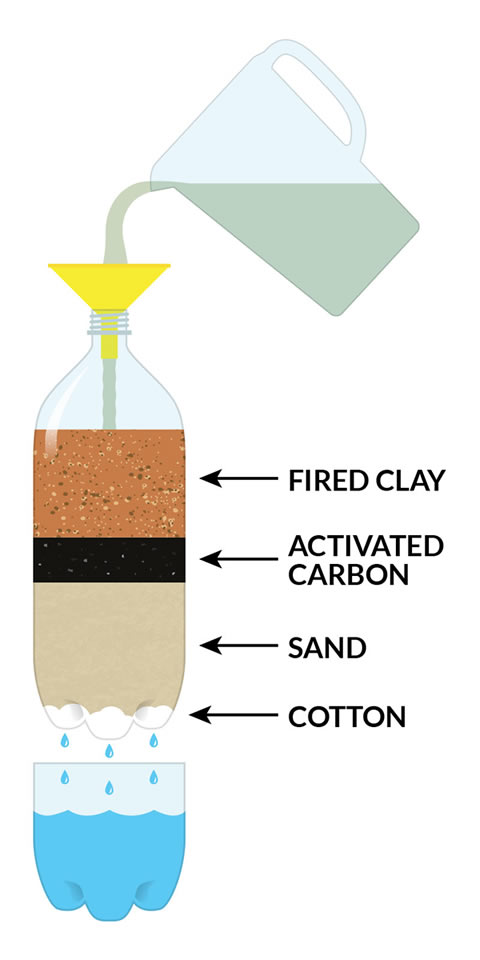
Stage 1: Physical Barrier
Removes visible particles and extends filter life. Pre-filters should capture debris down to 1 micron.
Stage 2: Chemical Adsorption
Activated carbon eliminates pesticides and improves taste. Alumina targets heavy metals like lead—critical in areas with aging pipes.
Stage 3: Electropositive Capture
The essential virus-killing stage. Only purifier bottles include this technology. Look for NSF P231 certification confirming 99.99% virus reduction.
Alternative Methods: When Purifier Bottles Aren’t Available
If you lack a true purifier bottle, these backup methods have critical limitations:
Boiling: The Reliable but Impractical Option
✓ Works against all pathogens including viruses
✗ Requires 1 minute rolling boil (3 minutes above 6,500 ft)
✗ Needs fuel source and cooling time
✗ Doesn’t remove chemicals or improve taste
UV Purifiers: Battery-Dependent and Flawed
✓ Effective against biological threats
✗ Requires clear water (fails with sediment)
✗ Batteries die at worst possible moment
✗ Leaves chemicals and microplastics intact
Chemical Tablets: The Taste You’ll Regret
✓ Kills viruses with proper waiting time
✗ Requires 30+ minutes before drinking
✗ Leaves chemical aftertaste
✗ Iodine unsafe for pregnant women or thyroid conditions
Health Consequences of Choosing Wrong
The stakes extend far beyond a “24-hour stomach bug.” Inadequate virus protection risks permanent health damage that derails lives.
Immediate Crisis Scenarios
- Hepatitis A: 2-6 months of jaundice, extreme fatigue, and liver inflammation requiring hospitalization
- Norovirus: Violent vomiting causing severe dehydration within hours—especially dangerous when remote
- Rotavirus: Life-threatening dehydration in children within 24 hours
Long-Term Health Fallout
- Post-infectious IBS: 10% of travelers develop chronic digestive issues lasting years
- Permanent liver damage: From severe hepatitis A cases
- Weakened immunity: Leading to recurrent infections
Financial Disaster Potential
- Emergency medical costs abroad ($500-$5,000+)
- Trip cancellation and early return flights
- Weeks of lost income during recovery
Choosing Your Protection: Destination-Based Decision Guide
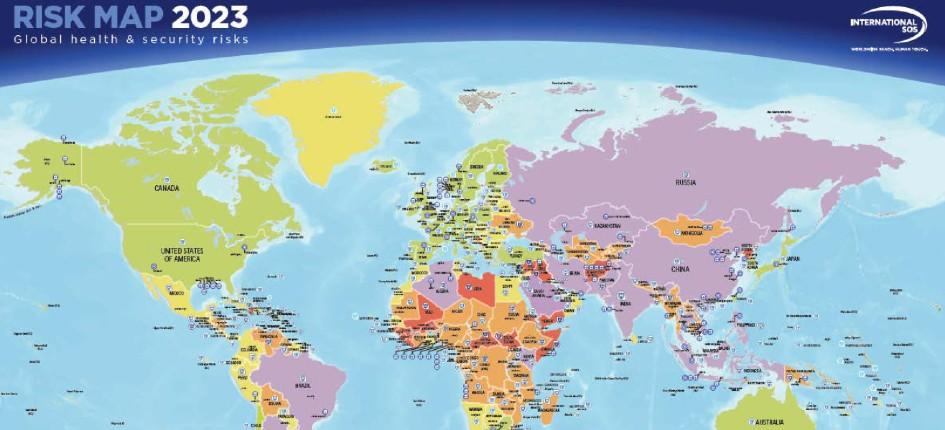
Your location determines the required technology. Never use standard filters in high-virus-risk areas—the $20 savings isn’t worth weeks of illness.
When You MUST Use a Purifier Bottle
- Developing nations (Southeast Asia, South America, Africa)
- Areas with “boil water” advisories
- After natural disasters (floods, hurricanes)
- Any destination with poor sanitation
When Standard Filters May Suffice
- Backcountry hiking in developed countries
- Clear mountain streams (still use purifier if traveling internationally)
- Municipal water sources in North America/Europe
Red Flags Requiring Immediate Upgrade
- Cloudy or murky water (indicates multiple contamination sources)
- Agricultural areas (animal waste runoff carries viruses)
- High tourist zones (increased human waste contamination)
- After heavy rainfall (surface runoff carries pathogens)
Critical Maintenance for Reliable Protection
Even the best purifier fails without proper care. Track filter usage religiously—exhausted filters provide zero virus protection with no warning signs.
Lifespan Management Checklist
- Replace every 200 liters or 3 months (whichever comes first)
- Mark replacement date on your calendar immediately after purchase
- Rinse thoroughly after each use to prevent biofilm growth
- Store wet if using weekly; dry completely for long-term storage
Pre-Use Verification Steps
- Soak new filters 15 minutes before first use
- Check flow rate—significant slowdown indicates clogging
- Verify manufacturer’s virus removal certification (NSF P231)
- Never let water sit in bottle between uses
The Verdict: Your Health Depends on This Choice
The evidence is unequivocal: standard filtered water bottles cannot remove viruses, leaving you vulnerable to serious, long-lasting illnesses. Only true water purifier bottles with electropositive nanofiltration technology provide complete protection against viruses, bacteria, parasites, and chemical contaminants. When traveling internationally or in areas with questionable water quality, choosing a basic filter bottle over a certified purifier isn’t just risky—it’s potentially life-altering. Invest in a bottle that explicitly states virus removal capability and carries NSF P231 certification. Your liver, your travel plans, and your health will thank you when you’re safely sipping from that questionable hostel tap water while others are doubled over in pain. Choose protection, not just filtration—your body can’t afford the difference.